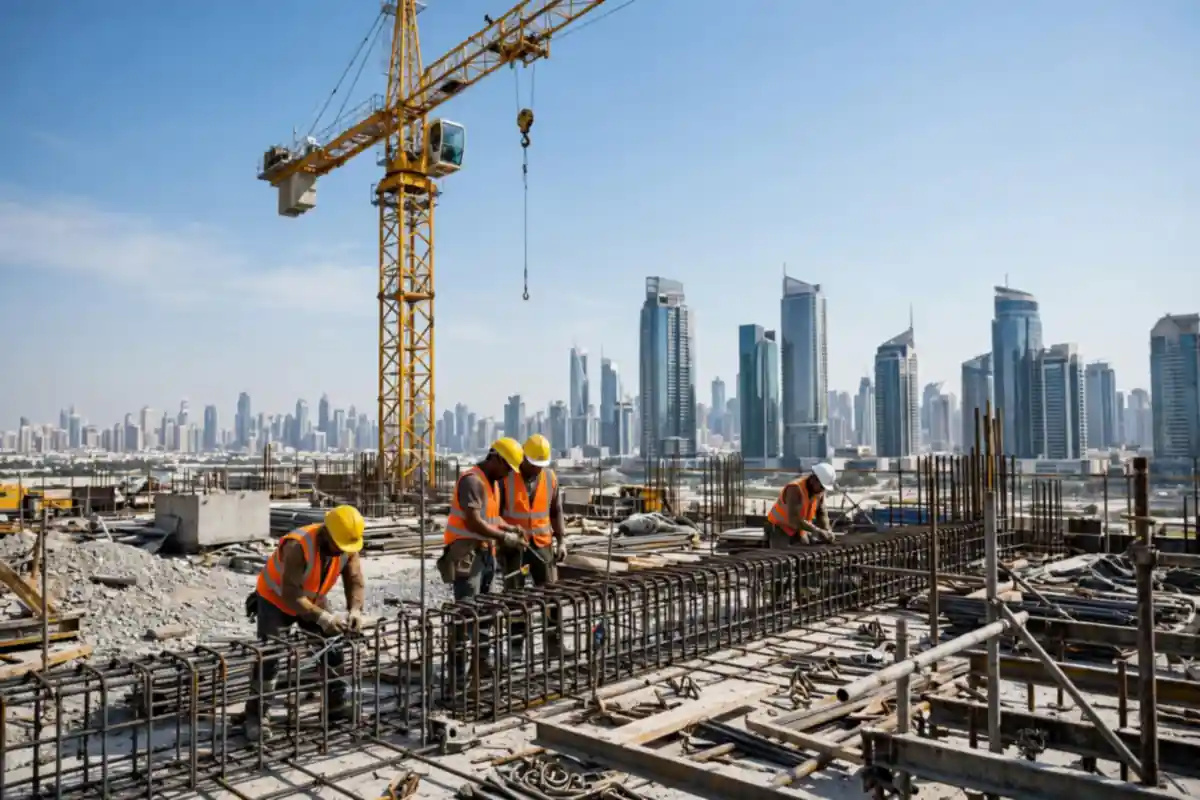
A trade licence does not let a construction company in UAE build anything in Dubai. That fact shocks most new owners, and it’s the first thing to learn. The licence gives your firm the right to exist. A second paper decides what you can build. A third paper, new in 2026, registers you on one unified list. This guide shows you how to start a construction company in UAE with all three layers in the right order.
Quick Answer: You need a DET trade licence with a contracting activity. You also need a Dubai Municipality contractor classification grade. You must also register on the unified Contractor Register under Dubai Law No. 7 of 2025. New firms start at the lowest grade and climb as they finish projects. BoloSara24 checked the Dubai Municipality classification document on 29 November 2026.
A construction company in UAE needs more than a licence
Start with the trade licence. The Department of Economy and Tourism issues it on the Dubai mainland. The economic department of each emirate issues it in that emirate. Your licence must carry a contracting activity that matches the work you will do.
Dubai Municipality lists the contracting activities in its own classification document. Building Contracting carries code 452001. It covers villas, towers and fit-outs as structural works. Other codes cover road contracting, foundation and piling work, steel construction and demolition. Pick the activity that matches your first jobs. The wrong activity blocks your classification later.
A mainland licence fits most firms, and a construction company in UAE usually starts on the mainland. Most building work happens on mainland sites under the municipal framework. Some free zones allow construction firms too, but the work still needs municipal approval for the site. Ask your licensing adviser which route fits your first project before you pay.
Choose your legal form with care. A limited liability company suits most owners. It separates your personal money from the firm’s money. A sole establishment is simpler but the owner carries full personal liability. Construction carries big claims. Most owners pick the safer form.
Dubai Municipality grades decide what you can build
This is the step most guides skip. Dubai Municipality grades every contractor. Your grade sets the size and height of the projects you can take. A firm with a low grade cannot bid on a tower, no matter how good its licence looks.
The classification uses building height as its ladder. The grades run from G+1 at the bottom to Unlimited at the top. G+1 means ground floor plus one floor. A new firm starts at G+1. It climbs to G+4, then G+12, then Unlimited as it builds a track record and hires more engineers.
| Grade | Max height | Minimum engineers |
|---|---|---|
| G+1 | Ground plus 1 floor | 1 engineer |
| G+4 | Ground plus 4 floors | 1 engineer |
| G+12 | Ground plus 12 floors | 2 engineers |
| Unlimited | No height cap | 3 engineers |
The engineer bar rises with the grade. A G+1 firm needs one engineer with three years of experience for a Bachelor degree holder. A Diploma holder needs five years. Higher grades need more engineers with longer experience. The engineers must hold a Bachelor of Civil Engineering for most grades. Each engineer also needs professional registration with the authority to sign off technical work.
Labour numbers rise too. A G+1 firm needs at least 10 labourers on its books. A G+4 firm needs about 40, a G+12 firm needs about 70 and an Unlimited firm needs about 100. These figures come from the Dubai Municipality classification criteria as published in market guides. Confirm the current numbers with Dubai Municipality before you hire. The criteria can change.
Dubai Municipality runs this classification through its Committee of Registration and Licensing for engineering consultancy and contracting. The committee checks four things: money, staff, equipment and past projects. A firm with no track record starts at the bottom. That’s normal. Every big contractor in Dubai started small.
The new Contractor Register
Dubai Law No. 7 of 2025 adds a third layer. The law was published on 8 July 2025 and took effect on 8 January 2026. It creates one unified Contractor Register for the whole emirate. The register is run by Dubai Municipality and linked to the Invest in Dubai platform.
The register covers every contractor in Dubai. Mainland firms, free zone firms and DIFC firms all sit on the same list. Every contractor must register and hold a classification, and you must work strictly inside your approved classification. A firm that takes work above its grade breaks the law.
The law sets fines for breaches. Market guides place fines from AED 1,000 to AED 200,000 based on the breach. Existing contractors have until 8 January 2027 to bring their status in line with the law. A one-year extension is possible. A new firm registers from day one. Build the register step into your setup plan, not as an afterthought.
Registration asks for your trade licence and your classification papers. It also asks for competency certificates for your technical staff, financial statements and proof of professional liability insurance. The registration lasts one year, so renew it within 30 days of expiry. A lapsed registration stops you from bidding.
Staff you must hire
People decide your grade and your first projects, so a construction company in UAE hires its engineer first. BoloSara24 notes that the lead engineer decides your grade more than any other hire. Hire in this order.
Hire your lead engineer first. The engineer holds the technical licence for the firm. Check the engineer’s degree, experience and registration status before you sign an employment contract. A firm without a registered engineer cannot get classified.
Hire a safety officer next. Construction sites in the UAE run under strict safety rules. The safety officer runs site inductions, toolbox talks and incident reports. A site with no safety officer is a site waiting for a fine.
Hire your foremen and skilled labour after the engineer is in place. Masons, steel fixers, carpenters and electricians each need the right skill for the grade you hold. A G+1 villa job needs a small skilled crew. A tower job needs a large one. Hire for the jobs you can legally take, not for the jobs you dream of.
Use the Wage Protection System for every salary. The law requires wages to be paid through WPS. A firm that pays cash outside WPS risks fines and a labour case. Set WPS up in your first week.
Costs and time for a construction company in UAE
Construction setup costs more than most new owners expect, so get a real quote first. The licence fee depends on your activity and your legal form. Ask DET for an exact quote on the Invest in Dubai cost calculator. Don’t trust a single figure from any agent. The fee changes with your activity mix.
Market guides place the base licensing cost from about AED 28,272. Total setup runs from AED 100,000 to AED 500,000 once office rent, staff, equipment and classification are added. These are market ranges, not official quotes. Your real figure depends on your grade, your staff size and your first project.
Time runs from four to eight weeks for the licence and classification in most market guides. That holds if your papers are complete. The most common delays are a missing Ejari, an incomplete engineer file and a late payment. Prepare every paper before you file. A complete file moves fast, while an incomplete file waits.
Keep cash in reserve for the first project. Construction clients pay in stages. Retention money sits with the client till the defects period ends. A firm that spends its whole setup cash on the licence won’t have anything left to run the site. Keep at least three months of wages in the bank before you start work.
Tip: BoloSara24 suggests you ask two contractors who started recently. Ask what their setup really cost and what delayed them. Real numbers from real owners beat any brochure.
Steps in order
Follow this order. It saves weeks.
First, pick your activity and your legal form. Check the Dubai Municipality activity list for the right code. Building Contracting is code 452001.
Second, reserve your trade name and get initial approval from DET. Then sign your office tenancy and register the Ejari.
Third, hire your lead engineer and prepare the classification file with degrees, experience letters and registration papers.
Fourth, apply for the trade licence and pay inside the payment window. Then apply for Dubai Municipality classification.
Fifth, register on the unified Contractor Register. Then register with Civil Defence and DEWA for your first project site.
Sixth, set up WPS, open your business bank account and buy your insurance. Professional liability insurance is part of the register file. Site insurance protects your first project.
What to remember
A construction company in the UAE stands on three papers, not one. The trade licence gives you a firm. The Dubai Municipality grade decides what you can build. The Contractor Register puts you on the official list. New firms start at G+1 and climb with finished work and strong staff. Hire your engineer first, keep cash in reserve and register on time. That is how to start a construction company in UAE and win your first real project.
Frequently Asked Questions
Can I build with only a trade licence in Dubai?
No. A construction company in UAE needs more than a trade licence alone. You also need Dubai Municipality contractor classification and registration on the unified Contractor Register. The classification grade decides what you can legally build.
What is Dubai Municipality contractor classification?
It is a grading system run by Dubai Municipality. It checks your financial strength, technical staff, equipment and track record, then gives you a grade. The grade runs from G+1 for small buildings to Unlimited for towers of any height.
What is Dubai Law No. 7 of 2025?
It is the Dubai law that regulates contracting activities. It was published on 8 July 2025 and took effect on 8 January 2026. It creates one unified Contractor Register for mainland, free zone and DIFC contractors. Existing contractors have until 8 January 2027 to comply.
How long does it take to start a construction company in Dubai?
Market guides place the licence and classification process for a construction company in UAE at four to eight weeks with complete papers. Delays usually come from a missing Ejari, an incomplete engineer file or a late licence payment.
How much does it cost to start a construction company in UAE?
Base licensing costs start from about AED 28,272 in market guides, with total setup from AED 100,000 to AED 500,000 once office rent, staff, equipment and classification are added. Ask DET for an exact licence quote for your activity.
Do my engineers need their own registration?
Yes. Engineers and technical managers need professional registration with the relevant authority to sign off technical work. The company licence alone is not enough. The engineer holds the technical right to approve the work.
Official Sources
– Dubai Municipality: Engineering Contracting Activities Classification (PDF) – Official classification list: Building Contracting code 452001 and the full activity table.
– Invest in Dubai: Company set-up options – DET licence types and the portal where you apply for a mainland trade licence.
– National Economic Register – Growth – Federal register to check company licences and activities in the UAE.
– UAE Government portal: Protection of workers’ rights – Worker rights and the Wage Protection System rules your site staff fall under.
Disclaimer
BoloSara24 is an independent information site. It is not a government body, not DET and not Dubai Municipality. Facts here were checked on the official pages listed above on 29 November 2026. Grades, fees and deadlines can change. Confirm every figure with Dubai Municipality and DET before you pay or hire. This article gives general information only. It is not legal or financial advice.
Last Updated: 29 November 2026.