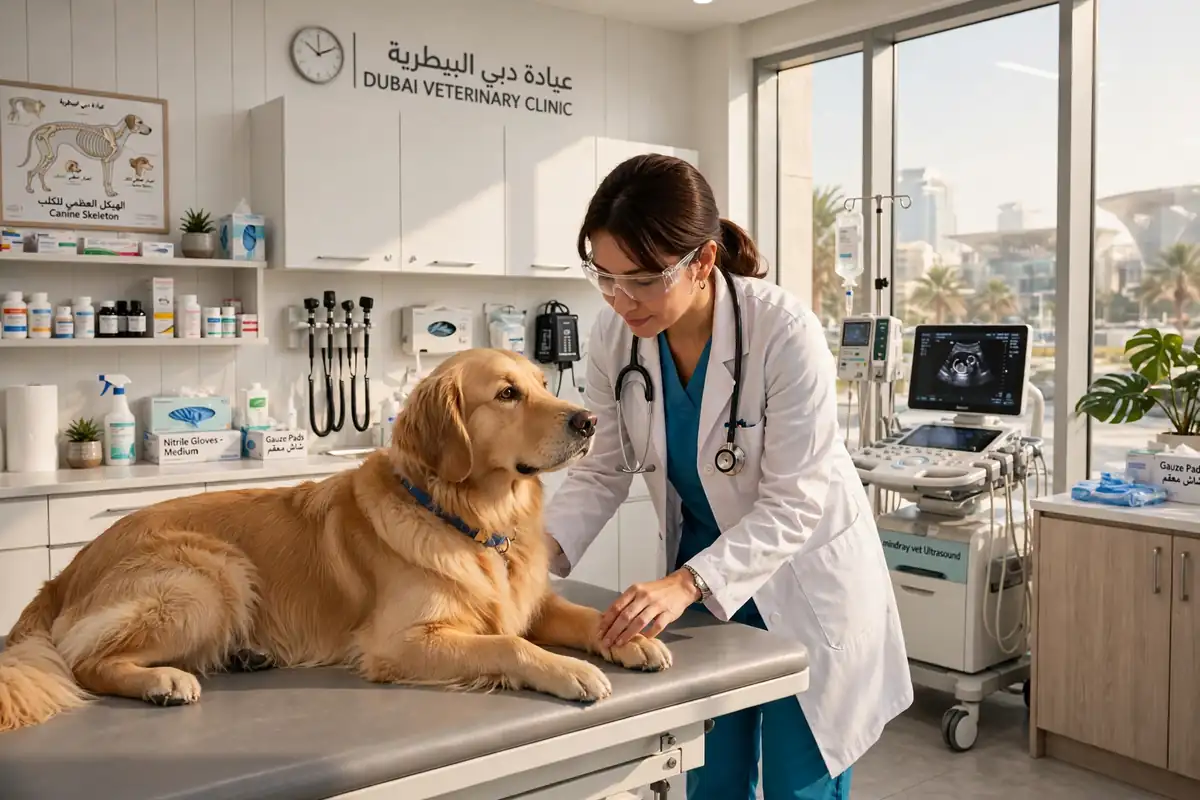
Veterinary jobs in UAE suit vets who love animals and want tax-free pay. Dubai and Abu Dhabi host most of the clinics. Small animal clinics hire the most vets, so veterinary jobs in UAE cluster in pet care. Large animal work sits in Abu Dhabi and Al Ain. Pet care keeps growing as more families keep dogs and cats. BoloSara24 checked the licence rules on the official ministry pages on 29 November 2026.
Quick Answer: You need a vet degree, a MOCCAE licence and a job offer from a licensed clinic. Most vets find work through clinic websites and recruiters. The licence takes weeks after your papers are attested. Start with the job offer. The clinic then helps with the licence.
What a vet does in the UAE
A vet in the UAE treats pets first. Dogs and cats fill most clinic days. Birds, rabbits and small exotic pets come next. Farm animals need vets too. Camels, horses and falcons have their own clinics in Abu Dhabi and Al Ain. Your day mixes consults, surgery, lab tests and vaccines. You talk to owners a lot. Clear talk matters more than long words.
Clinics run six days a week in most cases. Shifts run eight to ten hours. Emergency clinics run nights and weekends. You may work a rota that covers late shifts. Ask about the rota before you sign the offer. A good clinic tells you the hours in writing.
Do you like surgery or consults best? Small clinics need vets who do both. Large hospitals split the work. A surgeon handles the theatre. A medicine vet handles the consults. Pick the type of clinic that fits your skill.
Tip: Keep a short log of the cases you treat each week. It helps at your next job interview. It also helps when you renew your licence.
Veterinary jobs in UAE and who hires
Private pet clinics hire the most vets. Dubai has the largest number of clinics. Abu Dhabi comes next. Sharjah, Ajman and Ras Al Khaimah have fewer clinics but less competition. Government bodies hire vets too. The Ministry of Climate Change and Environment runs animal health work. Dubai Municipality runs vet services for the city. Zoos, falcon hospitals and horse stables hire specialist vets.
New clinics open each year in Dubai and Abu Dhabi. Pet ownership grows with the population. Clinics in new housing areas need vets first. They post jobs on their own websites. They also post on LinkedIn and job boards. Recruiters who focus on vet roles can help. Ask the recruiter which clinics they serve before you pay any fee. A real recruiter never asks you to pay for a job.
Vet nurses and vet technicians find work in the same clinics. A clinic with three vets may hire two nurses. The licence rules for nurses differ from the vet rules. The ministry lists a separate licence for vet technicians and vet nurses. Check the ministry page for the exact list.
Employer: A licensed clinic sponsors your work visa. The clinic must hold a valid trade licence and a vet establishment licence. Ask for the clinic licence number before you accept the offer. If the clinic won’t show you the licence, walk away.
The licence you need
The Ministry of Climate Change and Environment (MOCCAE) licenses vets in the UAE. You can’t practise without this licence. The licence lasts one year. You renew it each year. The licence names the clinic where you work. That’s how the ministry tracks each vet. A new job means a licence update.
You need a bachelor degree in veterinary medicine from a known university. You need proof of work experience. The ministry asks non-UAE citizens for five years of practice in most cases. UAE citizens need two years. Government vets may get an exemption with an official letter. The exact rule sits in Ministerial Resolution No. 62 of 2025. The BoloSara24 team read the resolution text on 29 November 2026. The one-year licence term and the experience rule match the text.
Your degree needs attestation. Your home country attests it first. The UAE embassy in that country attests it next. The UAE Ministry of Foreign Affairs attests it last. You also need a Ministry of Education equivalency certificate for a foreign degree. The equivalency step runs through a verification body first. Quadrabay and DataFlow handle degree checks for many applicants. Plan four weeks for this step.
Most private vets also sit a MOCCAE exam. The exam tests UAE rules and clinical practice. Your clinic tells you the exam date after it files your papers. Pass the exam and the ministry issues the licence. Keep every attested paper safe. You need the same papers at renewal time.
Requirements: Attested vet degree, MOE equivalency certificate, attested experience letters and a valid passport. You also need a job offer from a licensed clinic. You need a pass in the MOCCAE exam where the ministry asks for one.
Pay for veterinary jobs in UAE
Pay varies a lot by clinic, city and experience. The UAE publishes no official pay scale for vets. Your pay sits in your written offer letter. Read the offer before you sign it. A good offer lists the base pay, housing help, flight tickets and health cover. Some clinics add a share of the clinic income. Get that share in writing too.
New vets earn less than senior vets in veterinary jobs in UAE. A vet with five years of practice earns more than a fresh graduate. Specialists earn more again. Surgeons and exotic animal vets sit at the top of the pay range. Dubai clinics pay more than small town clinics in most cases. The cost of living in Dubai runs higher too. Compare the full package, not the base pay alone.
Ask three things at the interview. What is the base pay each month? What housing help comes with the job? How many flight tickets come each year? The answers tell you the real value of the job. A clinic that hides these answers is a bad sign. Walk away and apply to the next clinic.
Salary Requirement: No fixed salary rule exists for vets. Your MOHRE contract sets your pay. Check the contract pay matches the offer letter. If the two differ, ask the clinic to fix it before you sign.
How to apply step by step
Step one is your papers. Attest your degree and experience letters now. The attestation chain takes weeks. Start it before you apply for jobs. Clinics hire faster when your papers are ready.
Step two is the job hunt. Send your CV to clinics in Dubai and Abu Dhabi first. Most veterinary jobs in UAE sit in these two cities. Write a short cover note for each clinic. Name the animals you treat best. Name the surgery you can do. A clinic reads a short CV first. Keep your CV to two pages.
Step three is the interview. Most clinics interview by video call first. They may ask you to talk through a real case. A dog with a broken leg. A cat that stopped eating. Talk through your steps in plain words. They test your thinking, not your memory of books.
Step four is the offer and the licence. The clinic sends the offer. You sign it. The clinic files your licence papers with MOCCAE. You sit the exam if the ministry asks for it. The clinic then starts your work visa. The visa steps run through MOHRE and ICP. You take a medical fitness test after you arrive. You give biometrics for your Emirates ID. Your residence links to your Emirates ID.
Step five is the move. Book your flight after the entry permit arrives. Carry your attested papers in your hand luggage. Keep copies on your phone too. Tell the clinic your arrival date so it can book your medical test.
Do and Dont: Do attest your papers before you apply. Do ask for the full pay package in writing. Don’t pay any agent who promises a job for a fee. Don’t sign a contract that differs from your offer letter.
Common mistakes to avoid
The first mistake is a weak CV. A CV with no case detail looks empty. Add the animals you treat. Add the surgery you perform. Add the clinics where you worked. A hiring vet reads cases, not adjectives.
The second mistake is late attestation. Many vets apply for jobs first and attest papers later. The clinic then waits weeks for the papers. The job may go to a vet whose papers are ready. Attest first. Apply second.
The third mistake is a bad contract check. Some vets sign a MOHRE contract with lower pay than the offer letter. The contract is the legal paper. The offer letter is not. Match the two before you sign.
The fourth mistake is a fake recruiter. A real recruiter earns its fee from the clinic. It never asks you for money. If an agent asks for a fee to arrange a job, stop. Report the agent to MOHRE if it claims a link to the ministry.
Note: Your licence names one clinic. You cannot work at a second clinic on the same licence. A new clinic means a licence update with the ministry.
Worked examples
BoloSara24 gives two examples to show the path.
A vet from India holds a BVSc degree and six years of clinic work. She attests her degree and her experience letters. She applies to ten clinics in Dubai. Three clinics call her for a video interview. One clinic offers her a job. The clinic files her MOCCAE licence papers. She sits the exam in Dubai. She passes and starts work four months after her first application.
A vet from the Philippines holds a DVM degree and three years of practice. He needs two more years of experience for the standard licence route. He works two more years at a clinic in Manila. He keeps his experience letters attested each year. He then applies to clinics in Abu Dhabi and lands a job.
A vet nurse from South Africa holds a diploma in vet nursing. She applies for the vet nurse licence route. The ministry asks for one year of experience or a pass in its exam. She passes the exam and joins a clinic in Sharjah. Her pay is lower than a vet. Her hours match the vet rota.
Frequently Asked Questions
Do I need a licence to work as a vet in the UAE?
Yes. MOCCAE licenses every vet in the UAE. The licence lasts one year and names your clinic. You cannot practise without it.
How many years of experience do I need for veterinary jobs in UAE?
Non-UAE citizens need five years of practice in most cases. UAE citizens need two years. The rule sits in Ministerial Resolution No. 62 of 2025. Government vets may get an exemption with an official letter.
Can a fresh graduate get veterinary jobs in UAE?
A fresh graduate can apply for vet nurse or vet technician roles. The vet licence route needs years of practice first. Build your experience at home, then apply.
Which city has the most veterinary jobs in UAE?
Dubai has the most clinics and the most veterinary jobs in UAE. Abu Dhabi comes next with large animal and falcon work. Sharjah and the northern emirates have fewer jobs but less competition.
Does the clinic pay for my licence and visa?
Most clinics pay the licence and visa costs. The exact split sits in your offer letter. Ask who pays each fee before you sign. Get the answer in writing.
How long does the whole process take?
Attestation takes about four weeks. The licence and visa take more weeks after that. Most vets take three to five months from the first application to the first day at work.
Official Sources
Ministry of Climate Change and Environment (MOCCAE): the body that licenses vets in the UAE. It runs the vet licence service.
UAE Government Portal (u.ae): the official portal for UAE government services, work permits and visas.
Ministry of Human Resources and Emiratisation (MOHRE): the ministry that issues work permits and the standard employment contract.
Readers can also find work in the same field through the UAE work visa rules for veterinarians. Job seekers can compare routes in how to find part-time jobs in UAE and jobs in Jebel Ali. See also how to find midwife jobs in UAE and jobs in UAE after retirement.
Disclaimer: BoloSara24 is an independent site. It has no link with the UAE government, MOCCAE, MOHRE or any clinic. Rules and fees change. Confirm the current licence rules on the MOCCAE site before you apply. This page gives general facts only. It is not legal, career or immigration advice.
Last Updated: 29 November 2026.