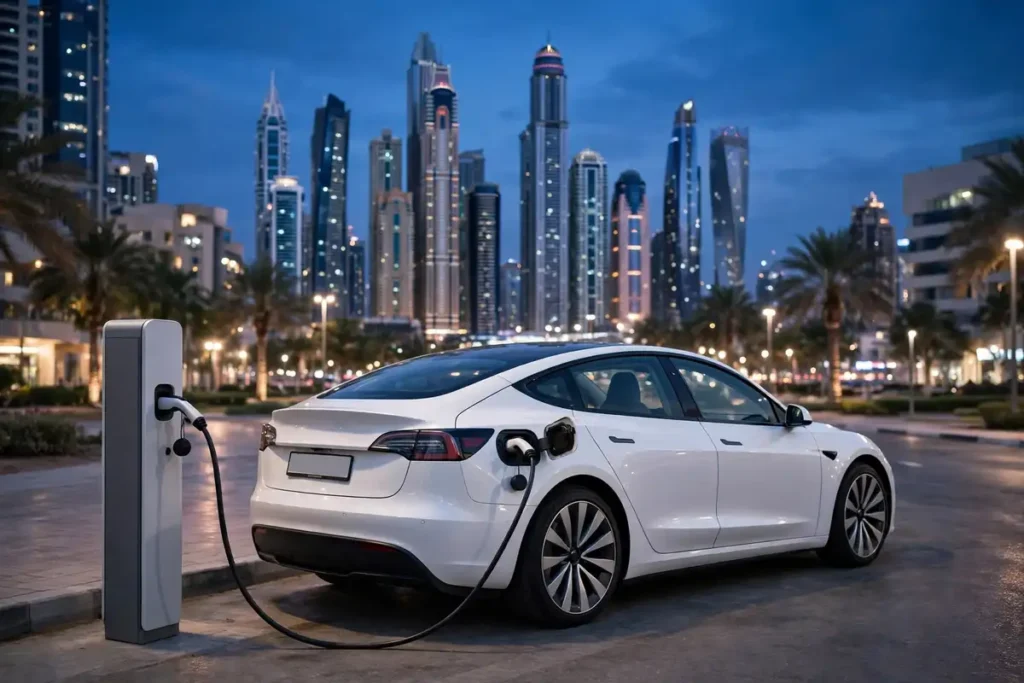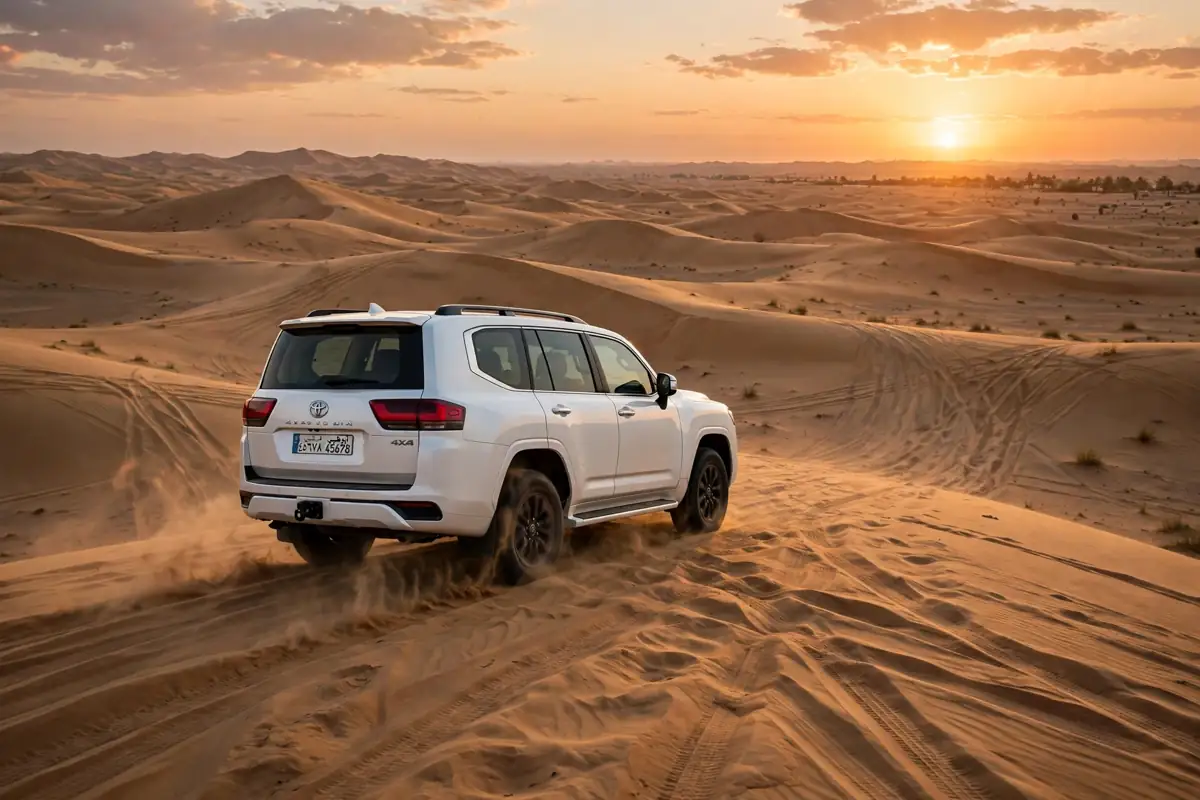
The UAE desert looks open and free. It is not a road. Soft sand, steep dunes and sharp heat can stop a car in minutes. A city car sinks fast. A driver with no plan can get stuck far from help. To drive in UAE desert safely you need a real 4×4. You need low tyre pressure, a second car, water, and a plan you told someone at home. BoloSara24 checked RTA safety tips and the National Centre of Meteorology on 29 November 2026. This guide uses those official pages and plain desert sense. It does not turn a first timer into an expert. It keeps a first timer safe.
Quick Answer: To drive in UAE desert safely, use a 4×4 with high ground clearance. Drop tyre pressure to around 18 to 22 PSI on sand. Drive with at least one other car. Tell someone your route and return time. Carry water and a phone charger. Re-inflate tyres before you return to tarmac. Never drive alone in remote dunes.
Is your car right for the desert?
A normal city car is not a desert car. Low cars scrape the sand. Small tyres sink. A 4×4 or an all wheel drive car with high ground clearance is the right tool. It sits high off the ground. Its underbody clears sand ridges. Its tyres grip soft sand better. A rental car in the UAE may ban off road driving in its terms. Read the contract before you take a hired car into sand. A ban in the contract can void your cover. You pay the full repair bill yourself.
Check the car before you leave the tarmac. Fill the fuel tank. A desert drive burns more fuel than a road drive. Low gear and wheel spin drink fuel fast. Check engine oil and coolant. Top them up to full. Check the battery. Heat kills weak batteries. Check the spare tyre. A spare with no air is no spare at all. Check the jack and the tools. Put them where you can reach them, not under a pile of bags.
All terrain tyres work best on sand. Their tread blocks grip loose sand. Road tyres slip more on soft dunes.
Tyre pressure: the first desert rule to drive in UAE desert
Tyre pressure is the biggest change between road and sand. On a road your tyres sit at 32 to 36 PSI. On sand that pressure makes the tyre narrow and hard. It digs in and sinks. Drop the pressure and the tyre spreads wide. It floats on the sand instead of digging in. Most desert drivers in the UAE drop to around 18 to 22 PSI for soft sand. That range is a guide, not a law. Your car manual may give a sand figure. Follow the manual if it does. Never drop below the manual figure.
Measure pressure when tyres are cold. Do it in the shade before sunrise or after sunset if you can. Hot sand and hot sun raise pressure fast. A tyre set at noon can read 3 PSI higher by midday. Use a digital gauge. It reads true to half a PSI. A cheap gauge can be 3 PSI out. That error matters on sand. Carry a portable air compressor. A 12 volt compressor plugs into the car and re-inflates tyres at the end of the trip.
Tip: Deflate all four tyres to the same pressure. A car with one hard tyre pulls to one side on sand. Mark the valve caps so you do not lose them in the sand. Put them in a small bag in the car. A lost cap lets sand into the valve. Sand in a valve leaks air all day.
Re-inflate before you return to tarmac. This step is not optional. Low pressure tyres on a fast highway overheat. They can burst at 120 km/h. Stop at the edge of the desert. Pump each tyre back to road pressure. Check with the gauge. Do not trust your eye. A tyre that looks full can still be 10 PSI low. Drive slow for the first few minutes on tarmac while the tyres settle.
Drive in UAE desert on sand
Sand driving is slow and smooth. Use low gear. Keep a steady speed. Do not floor the pedal. Wheel spin digs the car deeper. If the wheels spin, ease off. Let the car roll. A gentle touch keeps the tyres on top of the sand. A hard touch buries them. To drive in UAE desert safely, keep your speed low on dune crests. A crest hides what sits on the other side. Another car, a drop, or a camel can sit just past the top. Slow right down before each crest. Look, then cross.
Drive straight up a dune, not across its face. A side slope can tip a car over. Keep the wheel straight on a climb. If the car stops on a climb, do not spin the wheels. Reverse straight back down in the same tracks. Try again with a bit more speed at the base. If the car still cannot climb, pick an easier dune. There is no prize for a stuck car.
Keep to firm sand when you can. Old tracks show where the sand is firm. Stay off soft patches that look pale and loose. Pale sand is often the softest.
Never drive the desert alone
This is the rule that saves lives. Drive with at least one other car. Two cars can pull each other out. One car alone cannot. Tell someone at home your route and your return time. Give them the area name. Liwa, Al Marmoom, Al Qudra and the Empty Quarter fringe are big places. A name helps a rescue team find you. If you change your plan, call home and say so. A phone call takes one minute. A search takes hours.
Carry water for every person, plus extra. Sand surface heat can pass 70 degrees in July. Carry at least 3 litres of water per person. Carry shade too. Keep your phone charged. Mobile signal can be weak in remote dunes. Do not count on it.
Note: Learn the emergency numbers before you go. Police is 999. Ambulance is 998. Save them in your phone. If a car rolls or a person is hurt, call 999 first. Give your location as best you can. A pin from your phone map helps the rescue team. Stay with the car if you are lost. A car is big and easy to spot from the air. A person on foot in dunes is hard to find.
Recovery gear that earns its space
Pack recovery gear before you leave home. A tow rope rated for your car weight is first. A shovel is second. A tyre pressure gauge and a compressor are third. Sand tracks or sand ladders help a stuck car grip again. A pair of gloves keeps your hands safe on a hot tow rope. A first aid kit is a must. Check its dates. An old kit with dead plasters is no kit at all.
If a car gets stuck, stop and think before you spin the wheels. Dig sand away from the front of each tyre. Put sand tracks or a mat under the tyres. Drive out slow in low gear. Use the tow rope with the second car if you need it. Pull slow and straight.
Common Mistakes: New desert drivers make the same mistakes each season. They take a city car into soft sand. They forget to drop tyre pressure. They drive alone. They drive fast over dune crests. They run low on fuel and water. Fix those five and you fix most desert risk. A desert trip is fun when it is planned. It is a rescue job when it is not.
Heat, sun and your body
Desert heat hits fast. Wear a hat and light clothes. Use sun cream. Drink water before you feel thirsty. Thirst means you are already dry. Stop in shade at midday in summer. The hours from 11 am to 3 pm are the hottest. Sand heat can burn bare feet. Wear closed shoes on sand. Keep children in shade and give them water often. A child dries out faster than an adult.
Watch for heat trouble. A headache, dizzy feeling or fast pulse are warnings. Move the person to shade, give small sips of water, and call 998 if the person faints.
Check the NCM forecast before you go. A sandstorm can cut visibility to near zero in minutes. If a storm builds, leave the dunes and head for tarmac.
Respect the desert and the law
The desert is not empty land. Parts of it are protected. Some areas need a permit. Some are private farms or camel areas. Do not drive through a farm fence or a planted area. Do not chase animals. Do not leave litter. Take your rubbish home with you. A plastic bag in the desert can kill a camel that eats it. Leave the dunes as clean as you found them.
Traffic law still applies on desert tracks near roads. You need a valid licence to drive. A UAE driving licence guide on BoloSara24 lists the licence types and the steps to get one. Do not drive without a licence in the desert. Do not drive after drink or drugs. The police can reach desert areas. A crash in the desert brings the same law as a crash on a road.
Check your car registration in the UAE before a trip. An expired registration can bring a fine and an impound. A car history check in the UAE helps if you buy a used 4×4 for desert trips. It shows past crashes and past owners. A car with a bent frame is a bad desert car. Buy with facts, not with hope.
The bottom line
To drive in UAE desert safely, take a real 4×4. Drop tyres to around 18 to 22 PSI. Drive with a second car. Tell someone your plan. Carry water and recovery gear. Re-inflate before tarmac. Go slow over crests. Drive straight up dunes. Stop and think when a car gets stuck. The desert rewards a calm driver and punishes a rushed one. Plan the trip, pack the gear, and enjoy the dunes with a clear head. BoloSara24 will update this guide when official rules change. BoloSara24 checks RTA pages each season.
Do and Dont: Do use a 4×4 and drop tyre pressure on sand. Do drive with a second car and tell someone your route. Do carry water, a compressor and a tow rope. Do not drive alone in remote dunes. Do not speed over dune crests. Do not drive on tarmac with low tyre pressure.
Frequently Asked Questions
What tyre pressure should I use for desert driving in the UAE?
Most desert drivers use around 18 to 22 PSI on soft sand. Your car manual may give a sand figure. Follow the manual if it does. Measure when tyres are cold and re-inflate before tarmac.
Can I drive a normal car in the UAE desert?
No. A low city car sinks in soft sand and scrapes its underbody. Use a 4×4 or an all wheel drive car with high ground clearance. Check your rental contract first, as some ban off road driving.
Is it safe to drive in the desert alone?
No. Always drive with at least one other car. Tell someone at home your route and return time. A second car can pull you out. A lone car in remote dunes can wait hours for help.
What should I do if my car gets stuck in sand?
Stop spinning the wheels. Dig sand from in front of each tyre. Lower pressure a little more if you can. Put sand tracks or a mat under the tyres. Drive out slow in low gear. Use a tow rope with the second car if you need it.
What gear should I carry for a desert drive?
Carry a tow rope, a shovel, a gauge, a compressor, sand tracks, gloves, a first aid kit, water and a phone charger. Pack them where you can reach them fast.
When is the best time to drive in the UAE desert?
Early morning and late afternoon are best. Midday heat is harsh, most of all in summer. Check the NCM forecast before you go. Avoid sandstorms and extreme heat days.
Official Sources
RTA Safety Tips – RTA tips for driving in bad weather and for vehicle checks before a trip.
National Centre of Meteorology – Official heat, wind and sandstorm alerts for the UAE.
UAE Traffic Fines Schedule – Official fine schedule from the UAE Government portal.
Disclaimer: This guide gives general desert driving facts for the UAE. It is not legal advice and it does not replace desert driving training. Conditions change fast in the desert. Check the NCM forecast and your car manual before you go.
Last Updated: 29 November 2026.