A father dies in Dubai. He leaves a flat in JLT, a car and a bank account. He leaves a wife, two sons and a daughter. The family grieves first. Then a hard question lands. Who gets what? The answer is not a family vote. The answer sits in the law, the will and a court paper.
People search “divide inherited property UAE” when the family must act. You don’t need a lawyer to start. Divide inherited property UAE steps start with one court paper. The steps are fixed. The court names the heirs and their shares. The debts are paid. The Dubai Land Department moves the title. The heirs then divide the home by sale, by buyout or by shared ownership. Each path has a cost and a risk.
The BoloSara24 team read the Dubai Land Department inheritance page on 29 November 2026. It lists AED 1,000 per property for an inheritance transfer. A transfer under a will costs 0.125 percent of the value. Those two fees are the facts to plan around.
The short answer
Nothing moves until a court names the heirs. The title stays in the name of the deceased. Bank accounts freeze. The DLD will not move a title without a court paper. That’s the first fact to accept. Get that paper first.
The court paper is a legal inheritance certificate or an inheritance declaration. It names each heir and each share. The family then takes that paper to the DLD. The DLD registers the heirs on the title. Only then can the family sell the home or buy out a share.
Who inherits depends on faith and on the will. A Muslim estate follows fixed shares under the Personal Status Law. A non-Muslim estate follows the will or the civil default. A registered will replaces the default with the wishes of the deceased.
Can heirs divide a home without a court? No. A private deal between heirs has no force at the DLD. The court paper must come first. Don’t sign a private deal and expect the DLD to honour it.
Divide inherited property UAE: who inherits first
Two systems run side by side in the UAE. Divide inherited property UAE rules start with faith. Faith decides which one applies when no will exists. A will can change the result for a non-Muslim. It can change it only within limits for a Muslim.
For a Muslim who dies without a will, the fixed shares apply. A widow takes one eighth where children survive. She takes one fourth where no children survive. A widower takes one fourth with children and one half without them. A son takes twice the share of a daughter. Parents take fixed shares too. A Muslim will can give away up to one third of the estate. The rest must follow the fixed shares.
For a non-Muslim who dies without a will, Federal Decree-Law No. 41 of 2022 sets the default. Divide inherited property UAE rules for non-Muslims give half the estate to the surviving spouse. The other half is shared in equal parts among the children. Sons and daughters take the same share. Where no children survive, the estate passes to the parents and then to the brothers and sisters. The law has applied since 1 February 2023.
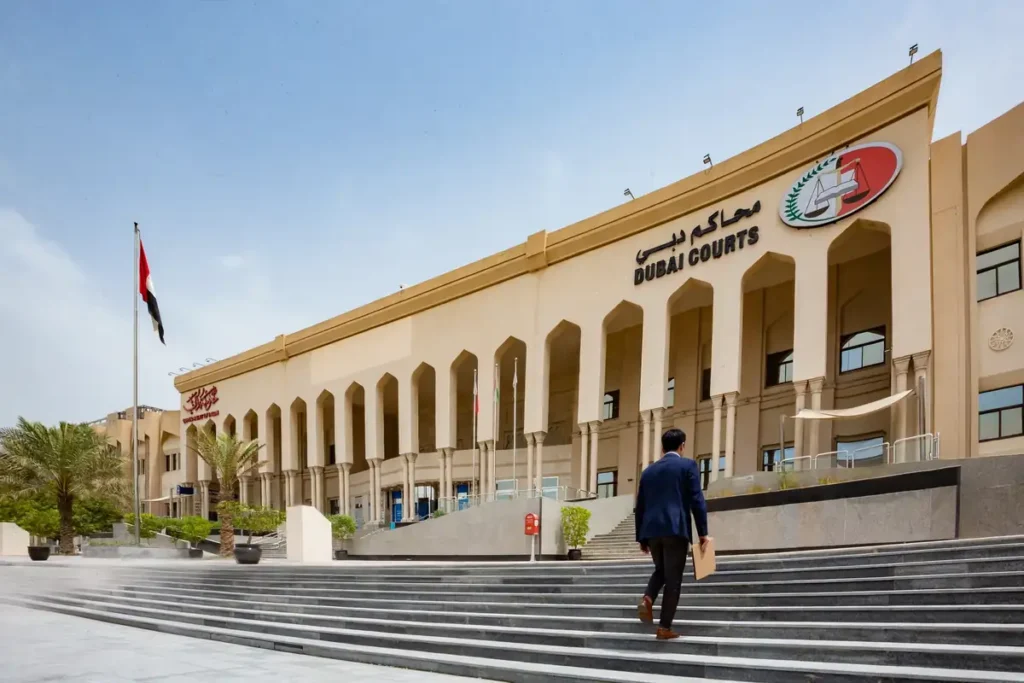
A registered will beats both defaults for a non-Muslim. Article 11 of the 2022 law gives a non-Muslim the right to leave UAE assets to any person they choose. A will made at the DIFC Courts, the ADJD or Dubai Courts carries that choice. The court follows the will.
Note: Debts come before shares. Funeral costs come first. Then debts. Then the will. Then the fixed shares. A family that divides the home before the debts are paid can face a claim from a lender later.
The court paper that opens the title
The court paper has one job. It tells the world who the heirs are. Without it, no bank and no land department can act. With it, every door opens in turn.
Start with the death certificate. Register the death first. Attest the certificate if the death took place abroad. A foreign death certificate needs attestation. The Ministry of Foreign Affairs must attest it. The embassy of the country that issued it must attest it too. A legal translation into Arabic is needed when the paper is not in Arabic.
Next, ask the court for the inheritance certificate. The family files the death certificate, the IDs of the heirs and the title deed. The court checks the papers. It may ask for a translation of a foreign will. It may ask for proof of the marriage. It then issues the certificate with the shares.
Where the deceased left a registered will, the executor files the will with the court. The court reads the will. It issues a probate order that lets the executor act. The executor then gathers the assets, pays the debts and asks the court to approve the transfer to the heirs.
How long does this take? A simple file with all papers in order can take weeks. A file with missing papers or a dispute can take months. Plan for the longer path when papers must come from a court abroad.
Tip: One heir should lead the file. Pick the heir who lives in the UAE and holds all the papers. A single point of contact keeps the court file moving.
The DLD transfer
The Dubai Land Department moves the title from the deceased to the heirs. The service is called Real Estate Inheritance Registration. Any person can apply. The applicant need not be an heir. The DLD needs the court paper. It needs the Emirates IDs of heirs who live in the UAE. It needs passport copies for heirs who live abroad.
A mortgaged home needs a no objection certificate from the bank. The bank must agree to the transfer. An off-plan home needs a no objection certificate from the developer. A home owned by a company needs a court decision first. The company share does not move the title on its own.
The DLD fees are fixed and public. Inheritance registration costs AED 1,000 per property. A transfer under a will costs 0.125 percent of the property value. An exit from inheritance, called takharuj, costs 1 percent of the value of the property in that deal. A new title deed costs AED 250. A map costs AED 100 to AED 250. A knowledge and innovation fee of AED 20 applies to the deal. Check the DLD page again before you pay. Fees can change.
Apply at a Trustee centre or at the DLD main building. Pay the fees. You receive an email when the new title is ready. The DLD step is the shortest part of the process. The court step is the long one.
Three ways heirs divide one home
Most families face one home and three or four heirs. One home cannot be cut into rooms. Three paths exist. Each one suits a different family.
Path one is a sale. The heirs sell the home on the open market. Divide inherited property UAE sales divide the price by the court shares. A sale is clean. It ends the shared ownership. It needs all heirs to agree on the price. The court can then order a sale when the heirs cannot agree.
Path two is a buyout. One heir buys the shares of the others. The buyer pays each heir their share of the value. A valuation sets the price. The DLD transfer then moves the whole title to the buyer. A buyout keeps the home in the family.
Path three is shared ownership. The heirs keep the home together. Each heir holds a share on the title. Rent is divided by the shares. Costs are divided by the shares. Shared ownership suits a family that wants to keep a holiday home. It fails when heirs disagree on rent or repairs.
Takharuj is a fourth tool. One heir exits the inheritance in favour of another heir. The DLD charges 1 percent of the value of the property in that deal. It must be recorded at the DLD to count.
Ahmed, Sara and Omar inherited a two-bed flat in JLT from their father. The flat was worth AED 1.6 million. The court gave each child an equal share. Ahmed wanted to keep the flat. Sara and Omar wanted cash. Ahmed took a mortgage for AED 1.1 million. He paid Sara and Omar AED 533,000 each. The DLD moved the title to Ahmed alone. The family closed the file in one month. A valuation and a mortgage pre-approval made it fast.
Debts and mortgages first
A home with a loan is not a free home. The bank has the first claim. The heirs must settle the loan before the title moves. The bank issues a no objection certificate when the loan is cleared. It also issues one when it agrees to move the loan to an heir.
Life cover can clear the loan. Many UAE mortgages carry life cover. The cover pays the bank when the borrower dies. Ask the bank about the cover on the first call. Don’t wait. A claim on the cover can take weeks.
Other debts count too. A car loan and a credit card sit in the estate. The BoloSara24 team hears this question from readers each week. The executor lists each debt. The estate pays them from cash and from the sale of assets. Heirs are not liable beyond the value of what they inherit.
Read more on property and wills on BoloSara24. Our guide to add a codicil to a will in UAE covers small changes to a registered will. Our guide to include digital assets in a will in UAE covers crypto and online accounts. Our guide to make a will for a blended family in UAE covers children from two marriages. Our guide to sell property without an agent in Dubai in UAE covers the sale path. Our guide to get a property valuation in Dubai in UAE covers the value step. Our guide to buy your first home in Dubai in UAE covers the purchase side. Our guide to register a death in UAE sets out the first papers a family needs.
Frequently Asked Questions
Who inherits a property in UAE when there is no will?
Faith and the law decide. A Muslim estate follows fixed shares. A non-Muslim estate follows Federal Decree-Law No. 41 of 2022. Half goes to the spouse and half is shared in equal parts among the children.
Can heirs sell an inherited flat in Dubai?
Yes, after the court names the heirs and the DLD moves the title to them. Divide inherited property UAE sales need all heirs to agree on the price. A sale before that step can’t be registered. The court can order a sale when heirs cannot agree.
How much does the DLD charge to transfer an inherited home?
Inheritance registration costs AED 1,000 per property. A transfer under a will costs 0.125 percent of the property value. A new title deed costs AED 250. Check the DLD page before you pay.
Can one heir buy out the others?
Yes. The buyer pays each heir their share of the value. A valuation sets the price. The DLD then moves the whole title to the buyer. The buyer needs cash or a new mortgage.
What is takharuj in UAE inheritance?
Takharuj is an exit from inheritance. One heir gives up their share in favour of another heir. The DLD charges 1 percent of the value of the property in that deal. It must be recorded at the DLD to count.
Do heirs pay the debts of the deceased?
The estate pays the debts from its own assets. Heirs are not liable beyond the value of what they inherit. A mortgage must be settled or moved before the DLD transfers the title.
Official Sources
Dubai Land Department inheritance registration: The DLD page lists the papers and fees for moving a title to heirs.
Cabinet Resolution No. 168 of 2026: The UAE guide to estate steps for non-Muslims.
DIFC Courts Wills Service: The DIFC Courts page for will registration.
Abu Dhabi Judicial Department FAQs: The ADJD page sets out the steps to register a civil will.
Dubai Law No. 15 of 2017: The Dubai law on will registers for non-Muslims.
Disclaimer
BoloSara24 is an independent guide. It is not a law firm. It is not linked to the Dubai Land Department or the DIFC Courts. It is not linked to the ADJD or Dubai Courts. It is not linked to any UAE government body. This page gives general facts only. It is not legal advice for your own estate. Laws and fees change. Check the official pages before you act. Ask a licensed UAE lawyer when heirs disagree. Ask one when a home carries a mortgage. Ask one when assets sit in more than one country.
Last Updated: 29 November 2026.