Fatima opened her bedroom wardrobe in Dubai Marina one August morning. Her clothes felt damp. A musty smell hung in the air. A dark spot had grown on the wall behind the bed. She wiped it off. It came back in two weeks. The spot was not the problem. The damp air was the problem. That damp air is why so many people look for ways to reduce humidity in UAE home air.
To reduce humidity in UAE home air, you first find where the water comes from. Then you dry the air with the AC and with daily habits. Then you keep it dry. This guide shows each step in order. It uses the numbers Dubai Municipality publishes for indoor air. It shows when a small patch is yours to clean and when you need a pro.
What You Need to Know
Dubai Municipality says indoor relative humidity should stay below 60 per cent. The same guidance says 30 to 50 per cent is the ideal band. A cheap hygrometer tells you your number in each room. Your AC is the main tool to cut humidity. Fix leaks and clear AC drains first. Dry laundry outside the bedroom. Run bathroom fans after every shower. A dehumidifier helps the rooms your AC cannot dry. Together these steps reduce humidity in UAE home air without a big spend.
Reduce Humidity in UAE Home Air Start With a Number
You can’t fix what you don’t measure. Buy a small hygrometer from a hardware shop. It shows temperature and relative humidity on one small screen. Put one in the bedroom and one in the living room. Read both at night. Night readings run higher than day readings. The AC cycles off at night and the air warms up.
Write the readings down for one week. Note the room, the time and the number. A bedroom that reads above 60 per cent at 2 am needs help. A living room that reads inside the 30 to 50 band at noon is fine. The log shows you which rooms to fix first. It also shows if a fix works. A dehumidifier that brings a room back below 60 per cent in a week earns its place.
The BoloSara24 team checked the Dubai Municipality Technical Guideline for Mold Remediation and Control (DM-HSD-GU142-MRC2) on 29 November 2026. The guideline was issued on 12 May 2025. It sets the same band used across this guide. Keep indoor relative humidity below 60 per cent, and aim for 30 to 50 per cent where you can.
Tip: Check the reading behind furniture too. A wardrobe pushed tight to a cold wall traps damp air. Leave a hand width gap behind wardrobes and beds so air can move.
The AC Is Your Best Dehumidifier
Your AC dries air as it cools it. Warm damp air hits the cold coil. Water drops out of the air and runs down the drain. That’s why a healthy AC keeps a home dry. A sick AC leaves the home damp. This one machine does more to reduce humidity in UAE home air than any gadget you can buy.
Set the AC to a steady temperature and leave it there. Big swings between hot and cold let damp air back in. Don’t switch the AC off for days when you travel. A closed home with the AC off turns damp fast in a UAE summer. Leave the AC on a mild setting while you are away. Read our guide on keeping your home safe during holidays in UAE. It covers the power and water checks to run before you leave.
Clean the AC drain line. A blocked drain backs water into the ceiling. Stains below a duct or a drip from a grille point to a blocked drain. Ask your AC firm to clear the drain and clean the drip tray at each service. Dubai Municipality guidance expects condensate trays to be cleaned at least monthly where their condition needs it. Ask your firm to show you the tray after a clean.
Check the filters. A clogged filter cuts airflow and the coil cannot dry the air well. Wash or swap the filter on the schedule your AC firm gives you. A clean filter also cuts the dust that feeds musty smells.
Find the Water Before You Fight the Air
Humidity is a symptom. Water is the cause. Walk your home once a month and look for water. Check under kitchen and bathroom sinks. Check behind the washing machine. Check the AC drain outside. Check the corners of windows after a humid night. At BoloSara24 we say it plainly. To reduce humidity in UAE home air, chase the water first.
Condensation forms where humid air meets a cold surface. Cold water pipes sweat in summer. A window frame sweats on a humid morning. A wall behind a wardrobe sweats when warm air cannot reach it. Wipe the water away and fix the cold spot. Insulate a sweating pipe. Reseal a worn window seal. Move the wardrobe a hand width from the wall.
Leaks hide. A stain on a ceiling below a bathroom points to a leak above. A soft patch on a wall points to water inside it. A musty smell with no visible spot points to hidden damp. You’ll find the cause faster if you check one room each week. Report leaks to your landlord or building management the day you find them. Tenants who wait lose the chance to prove the leak started early. Our guide on mould in UAE apartments shows how damp grows in flats and what to check first.
Does your bedroom smell musty in the morning? That smell is your first warning. Find the water that feeds it before you buy any gadget.
Daily Habits That Reduce Humidity in UAE Home Air
Small habits move the number more than big gadgets do. Run the bathroom fan during a shower and for 20 minutes after it. The fan pulls steam out before it settles on walls. Cook with lids on pots and run the kitchen fan. Steam from cooking adds a lot of water to the air each week.
Dry laundry outside or in a room with open air flow. Clothes dried in a closed bedroom add a lot of water to the air. Never dry clothes on a rack in the bedroom you sleep in. Open windows for a short time on a dry winter morning. In the humid summer months, keep windows shut and let the AC do the drying. These small steps reduce humidity in UAE home air day by day.
| Room | Habit that cuts humidity |
|---|---|
| Bathroom | Fan on during and after showers |
| Kitchen | Lids on pots, fan on while cooking |
| Bedroom | No indoor laundry drying, gap behind wardrobe |
| Living room | AC steady, windows shut in humid months |
| Laundry area | Door open to air flow, drain clear |
Omar in International City dried his clothes on a rack in his bedroom for a year. His room read high at night. He moved the rack to the balcony. His night reading dropped a lot in a week. One habit moved the number more than a new gadget would have. BoloSara24 readers tell us the same story. The bedroom rack is the first thing to move.
When to Buy a Dehumidifier
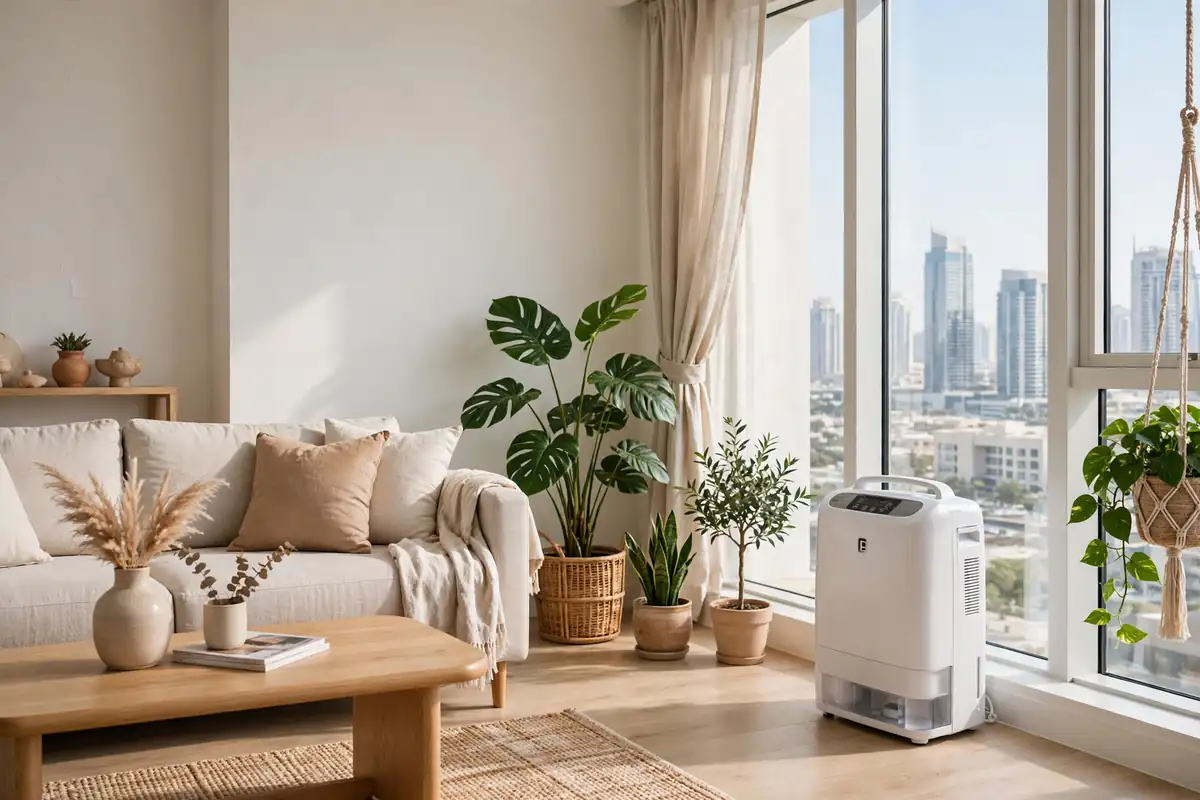
Buy a dehumidifier when one room stays above 60 per cent after you fix the leaks and the AC. Pick a unit with a built in humidity setting. Set it to 50 per cent and let it switch itself off. Empty the tank each day or fit a drain hose to a sink. A full tank stops the unit and the room turns damp again.
Size the unit to the room. A small unit in a big living room runs all day and changes nothing. Ask the shop for the room size the unit covers. Place it away from the wall so air flows around it. Keep doors and windows shut while it runs. Open rooms let humid air in as fast as the unit pulls it out.
A dehumidifier is a helper, not a cure. If the room stays damp with the unit running, the water comes from a leak or a broken drain. Find that water first. No gadget dries a home with a live leak. It’s the leak you must fix, not the air.
Mould Clean Small Patches Call a Pro for the Rest
Mould grows where damp air stays. Dubai Municipality guidance sorts mould jobs by size. A patch under 10 square feet is small. That is about one square metre. You can clean a small patch on hard tiles yourself. Wear gloves, goggles and an N95 mask. Scrub with mild detergent and warm water. Dry the surface fully after. Clean it right and you reduce humidity in UAE home air at its source.
A patch above 10 square feet needs a pro. Mould inside the AC or ducts needs a pro at any size. Mould that keeps coming back after two cleans needs a pro to find the water. Pros work inside plastic sheeting with HEPA filtered fans so spores do not spread through the home. The guideline asks for a written scope, photos before work starts and a check after the work ends.
After any clean, dry the area fully before you paint. The guideline expects wood and drywall to dry below 16 per cent moisture content. Dry them fully before they are closed up or painted. A moisture meter shows the number. Paint over damp wood and the mould returns under the paint. If the job leaves marks on your walls, read our guide on painting a rented apartment in UAE. Repaint only after the wall is dry.
Soft furnishings hold damp too. Carpets and sofas soak up humid air and hold the smell. Our guides on carpet cleaning in Dubai and sofa cleaning in Dubai show how to keep them dry and clean. Read our guide on the weather in UAE through the year to know which months run most humid.
Frequently Asked Questions
What humidity level should I keep in my UAE home?
Keep indoor relative humidity below 60 per cent. Dubai Municipality guidance says 30 to 50 per cent is the ideal band. A hygrometer in each main room shows your number.
How can I reduce humidity in UAE home air without a dehumidifier?
Run the AC at a steady temperature. Run bathroom fans after showers. Dry laundry outside the bedroom. Fix leaks fast. Clear the AC drain. These steps cut most damp air without a new gadget.
Why does my home feel damp when the AC is on?
A blocked AC drain, a dirty filter or a coil fault stops the AC from drying air. Big temperature swings let damp air back in. Ask your AC firm to check the drain, the tray and the filter first.
Does opening windows reduce humidity in UAE?
In the dry winter months a short open window helps. In the humid summer months open windows let damp air in. Keep windows shut in summer and let the AC dry the air.
Can I clean mould myself in my UAE home?
You can clean a small patch under 10 square feet on hard tiles yourself. Wear gloves, goggles and an N95 mask. Scrub with mild detergent and warm water. Larger patches and mould inside the AC need a pro.
Should I leave the AC on when I travel from UAE?
Yes. Leave the AC on a mild steady setting. A closed home with the AC off turns damp fast in a UAE summer. Ask a neighbour or your building watchman to check the home once a week.
Official Sources
- Dubai Municipality Technical Guideline for Mold Remediation and Control (DM-HSD-GU142-MRC2). Dubai Municipality Health and Safety Department guideline issued 12 May 2025 that sets indoor humidity bands, mould size levels and remediation steps.
Disclaimer
BoloSara24 is an independent guide. It has no link with Dubai Municipality or any cleaning or AC firm. Facts here were checked on official sources on 29 November 2026. Humidity bands and mould size levels follow the Dubai Municipality guideline named above. Rules change. Confirm current guidance with Dubai Municipality before you start remediation work. This guide is general information only. It is not legal, medical or technical advice. If mould covers a large area or someone at home has breathing trouble, ask a licensed pro and a doctor.
Last Updated: 29 November 2026.