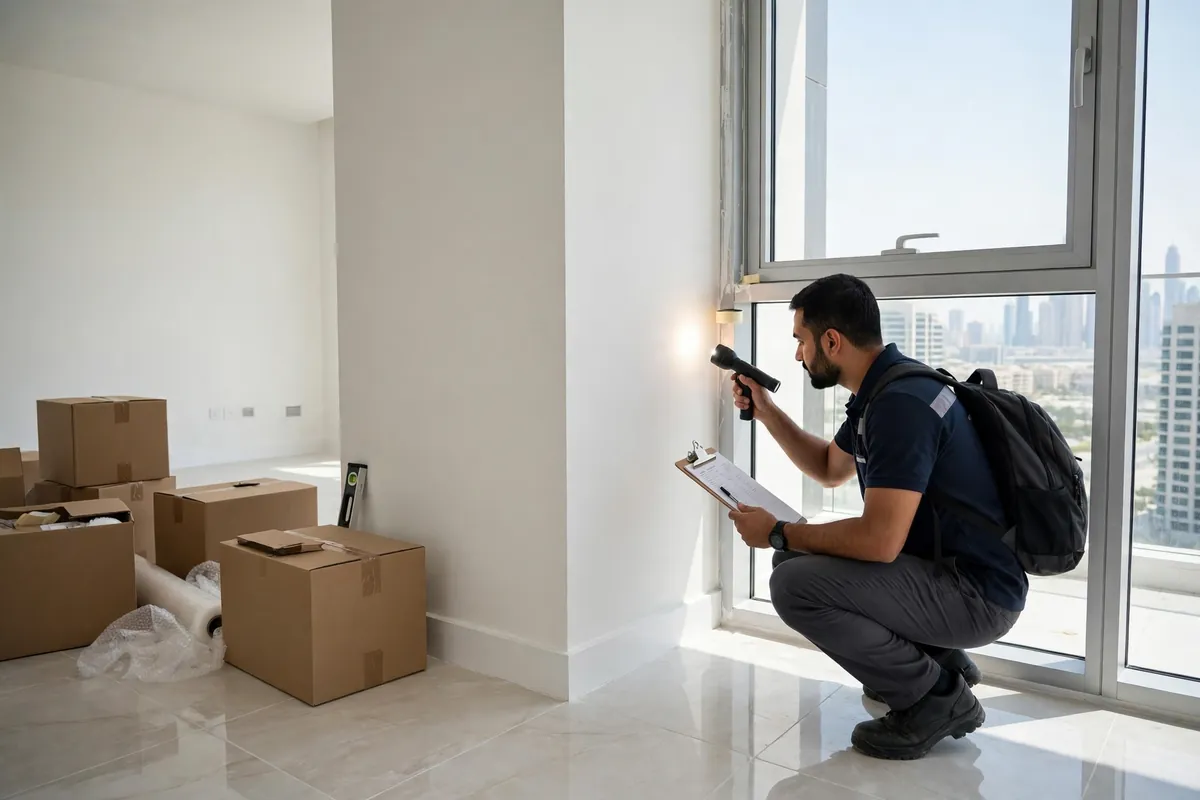
Your new home in Dubai looks ready, but the paint, tiles, taps. Doors still need a close check before you take the keys. Property snagging Dubai UAE is the inspection you do at handover to find every defect. Write it down, and get the developer to fix it at no cost to you. This guide from BoloSara24 walks you through the full check. Room by room, so you move in with no nasty surprise.
Quick Answer: Snagging means you inspect your new Dubai home before you sign the handover form. List every defect with photos, and hand the list to the developer in writing. You check walls, floors, doors, windows, taps, power points, air cooling, and kitchen fittings. You never sign a clean handover form for a home with defects still on it.
What Is Property Snagging in Dubai UAE
Property snagging Dubai UAE, as BoloSara24 explains it, is a formal check of a new home at handover. A snag is any defect, unfinished item, or part that does not match your sale contract. Snagging covers two kinds of homes. The first is an off-plan home, which you bought before it was built. The second is a new ready home that no one has lived in yet. In both cases, you inspect the home before you accept it.
The developer hands over the home after the building gets its completion certificate. The certificate shows that the building passed official checks and is fit to live in. After that, the developer sends you a handover notice and a date for your inspection. You can inspect the home yourself, or you can hire a professional snagging firm to do it with you. Both routes are open to you, and many buyers do both. You walk the home first, and the firm checks the technical parts.
Why Snagging Matters Before You Move In
The handover form is the key paper in property snagging Dubai UAE. When you sign it, you tell the developer that you accept the home. If you sign it with no snag list, the developer can blame you for the defect. They can say it came from your use of the home, not from the build. A dated snag list with photos stops that claim. It proves the defect was there on handover day.
Dubai law backs you on the big items. The UAE Civil Code gives a ten-year warranty for structural defects in a building. Counted from the date the building was completed. This covers the frame, the load-bearing walls, and the main structure. Fit-out items such as paint, tiles, and fittings fall under your sale contract. Your contract states the defect period for those items, so read it before your inspection day and note the dates.
Tip: Book your inspection in daylight. Allow at least two hours for a one-bedroom home and three hours for a villa. You need natural light to see paint faults, damp marks, and uneven tiles. A rushed check in the evening will miss defects that daylight would have shown.
Property Snagging in Dubai UAE Checklist Room by Room
For property snagging Dubai UAE, work through the home one room at a time. Tick off each item as you test it. Don’t skip the small rooms, the balcony, or the store room. Defects hide in the places buyers rush past. This BoloSara24 checklist covers the full home. You can use it as your snag list on the day.
Living room and bedrooms
Start with the walls and ceiling in each room. Look for cracks, uneven plaster, damp stains, and missed paint. Shine a torch along the wall at a low angle. This shows bumps and dips that a straight look will miss. Check that corners are straight and joints are neat. Look at the ceiling for water marks, which point to a leak from the floor above.
Test every door in the room. Each door must open and close with ease, latch shut, and sit straight in its frame. Check the handles, hinges, and locks. Look for scratches, dents, and paint marks on the door face. Test each window too. It must open, close, and lock, and the seal must sit tight all round. Look for cracked glass, scratched frames, and gaps that let in dust or sound.
Kitchen
The kitchen has more fittings than any other room, so give it extra time. Open and close every cupboard door and drawer. Each one must shut flat, glide with ease, and line up with its neighbour. Check the hinges, handles, and soft-close parts. Look inside each cupboard for scratches, stains, and unfinished edges. Check the worktop for chips, stains, and gaps where it meets the wall.
Bathrooms
Bathrooms are the top spot for leaks, so test them with care. Run each tap, shower, and bath and watch the drain. The water must flow away fast, with no pool on the floor. Flush each toilet twice and check the cistern, the seat, and the base for leaks. Look at the sealant round the bath, shower, and basin. Gaps in sealant let water into the wall, and that damage shows up months later.
Note: A small damp patch on a bathroom wall or ceiling is never a small matter. It points to a leak in a pipe or a joint, and it will grow if no one fixes it. Write it down, take a close photo and a wide photo. Ask the developer for a fix date in writing.
Balcony, store room, and maid room
Step out onto the balcony and check the floor tiles, the drain, and the rail. The floor must slope toward the drain so rain water runs off. Look for cracked tiles and for grout that has washed out. Check the rail for firm fixings and for rust or loose joints. Look at the balcony door seal and test the lock.
Entrance, hallway, and main door
Check the main door first. It must close tight, lock with ease, and sit straight in its frame. Test the peephole, the doorbell, and the intercom if the home has one. Check the letter box and the door number. Look at the hallway walls, floor, and ceiling for the same faults you checked in the rooms.
What Counts as a Defect in Property Snagging Dubai UAE
BoloSara24 notes that not every mark is a snag in property snagging Dubai UAE. The developer will push back on small items. A defect is any item that is unfinished, broken, unsafe, or not as your contract states. Paint that is patchy or missed counts. A tile that sounds hollow counts. A door that won’t latch counts. A tap that drips counts. A socket with no power counts. A fitting that is a cheaper brand than the contract states counts too.
How to Report Defects to the Developer
Write your snag list on the day, before you leave the home. List each defect by room, with a short line that states the fault and its place. Add a photo for each item. Take one wide shot that shows the place and one close shot that shows the fault. Number each item so you and the developer can talk about it with ease.
Checklist: Your snag list must have the date. Add the home number and tower name. Add your name and contact. List each defect by room. Add a photo for each defect. Add the fix date the developer gave you. Keep one copy for yourself. Give one copy to the developer. Save the email and the signed copy in one folder.
Your Rights After Handover
Your rights don’t end on handover day. The ten-year structural warranty under the UAE Civil Code runs from the date the building was completed. If a structural fault shows up in that time, the developer must deal with it. Your sale contract sets the period for fit-out defects, and many contracts set one year from handover. Read your contract and note the end date so you can report fit-out faults in time.
If the developer won’t fix a listed defect, raise the matter with the Dubai Land Department, known as DLD. The Real Estate Regulatory Agency, known as RERA, sits within DLD and regulates developers in Dubai. You can file a complaint with RERA through DLD and ask for help with a developer who won’t act. Keep your snag list, photos, emails, and the signed handover form as proof for the complaint.
Common Mistakes in Property Snagging Dubai UAE
The most common mistake BoloSara24 sees is to sign the handover form first and inspect the home later. Once you sign, your leverage drops fast. Inspect the home before you sign, and attach your snag list to the form. The second mistake is to report defects by word of mouth. A verbal note leaves no proof. Put every defect in writing with a photo and a date.
Warning: Never pay the final amount in full before your inspection if your contract lets you hold it back. Check your payment terms with care. The final payment is your leverage, and once the developer has it, the fix may take much longer. If the contract ties the final payment to handover, ask the developer in writing. Ask how the snag fixes will run after payment.
Property Snagging in Dubai UAE Before You Move In
Plan your move round the snag fixes, not the other way round. Book your movers after the re-inspection, not before it. Check your DEWA new connection and your Ejari status in the same week. If you plan to rent the home out, read our BoloSara24 guide to community fees in Dubai UAE. Our BoloSara24 guide on how to check the RERA rental index in UAE can help too.
On move-in day, do one last walk through the home with your snag list in hand. This last check ends your property snagging Dubai UAE inspection. Check that each fixed item holds, that the home is clean, and that the keys, cards, and remotes all work. Take a photo of the meter readings on the day you move in. Then you can settle in with peace of mind. Your new home in Dubai will feel like yours from the first night.
Frequently Asked Questions
What is snagging in Dubai property handover?
Property snagging Dubai UAE is the inspection you do before you accept a new home. You check each room, list every defect with photos, and hand the list to the developer in writing. The developer must fix the listed defects, and you check each fix at a re-inspection.
How long does a snagging inspection take in Dubai?
Allow at least two hours for a one-bedroom home and three hours for a villa. A professional firm may take longer, as it tests the power, water, and air cooling in depth. Book the slot in daylight so you can see paint and tile faults with ease.
Can I hire a professional snagging firm in Dubai?
Yes, you can hire an independent snagging firm to inspect the home with you. The firm tests the technical parts and gives you a full report with photos. Share the report with the developer in writing on the same day.
What happens if the developer refuses to fix a defect?
Raise the matter with RERA through the Dubai Land Department. File a complaint with your snag list, photos, emails, and the signed handover form. RERA regulates developers in Dubai and can help when a developer won’t act.
Does UAE law protect buyers after handover?
Yes, the UAE Civil Code gives a ten-year warranty for structural defects, counted from the date the building was completed. Fit-out defects fall under your sale contract. So read the defect period in your contract and report faults before it ends.
Must I sign the handover form before the snag fixes?
No, you must inspect the home first and attach your snag list to the form. The form must state that the listed defects still need a fix. Never sign a form that says the home has no defects when your list shows defects.
Official Sources
- Dubai Land Department (DLD): The official body for land and property in Dubai, including title deeds, handover rules, and RERA complaints.
- DLD Rental Index: The official DLD tool that shows average rents for similar homes, which helps you value your home before you rent it out.
- Dubai Electricity and Water Authority (DEWA): The official site to set up power and water for your new home after handover.
- The Official Portal of the UAE Government: The official UAE government portal with housing and property services for residents.
Disclaimer: This BoloSara24 guide gives general facts about property snagging in Dubai for buyers. It’s not legal advice. Your sale contract sets your own rights and dates. Read it with care. Seek a licensed legal adviser in Dubai if you face a dispute with a developer.
Last Updated: 29 November 2026.