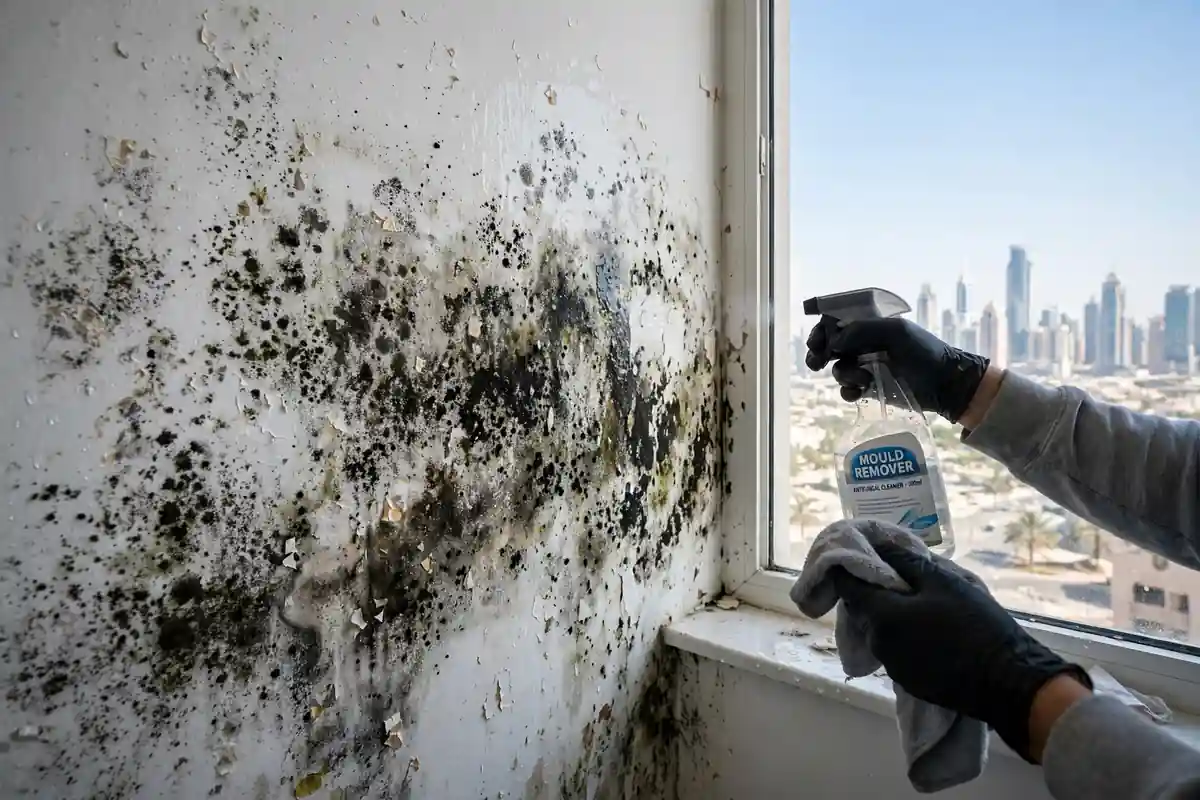
Mould in UAE apartments is a common sight after a leak or a humid summer. BoloSara24 hears about it from tenants each year. A black patch grows behind a wardrobe. A damp mark spreads on a bath wall. A musty smell fills the bedroom each morning. The patch looks small, but the cause behind it can be big.
Mould grows where water stays. A leaking pipe feeds it. A blocked AC drain feeds it. A failed bath seal feeds it. Clean the patch and the patch returns, because the water still flows behind the wall.
BoloSara24 checked the Dubai Municipality technical guidelines list on 29 November 2026. The list includes Technical Guideline 142 for Mold Remediation and Control, code DM-HSD-GU142-MRC2. The guideline treats moisture as the root cause of mould. That fact shapes every fix in this guide.
Quick Answer: Mould in UAE apartments comes from water, not from dirt. Find the water source first. Tell the landlord in writing. The landlord usually pays when the building causes the damp, and you pay when your own use causes it.
Why mould grows in UAE homes
Dubai air stays humid for much of the year, and that feeds mould in UAE apartments. Cold AC air meets warm humid air on a wall. Water drops form on the cold surface. That water feeds mould on paint, wood and cloth.
AC drains cause many cases. An AC unit makes water as it cools the air. A drain pipe carries that water away. A blocked drain lets the water spill into the ceiling. A stain grows under the AC unit first.
Pipe leaks cause the worst cases. A pipe inside a wall can leak for weeks with no sign. The wall stays damp. The paint bubbles. The mould grows in a wide patch. A leak like this needs a plumber, not a cloth.
Bath seals fail with time. The seal around a shower or a bath cracks. Water seeps into the wall each time you shower. The wall behind the bath turns damp. The mould grows at the base of the wall.
Example: Lina finds a black patch behind her wardrobe in August. She cleans it. The patch returns in two weeks. A plumber finds a leaking AC drain above the false ceiling. The drain is fixed. The patch is cleaned. The mould never returns.
Tip: Mould that returns in the same spot after cleaning almost always has a water source behind it. Cleaning alone won’t fix it. Find the water first.
Is mould bad for your health
Mould can harm health. Kids, old people and people with asthma face the most risk. A musty smell can bring a cough. A damp room can bring a blocked nose. A bad case can bring breathing trouble at night.
Do not sleep in a room with a large mould patch. Move your bed to another room when you can. Open the windows in the morning. Run the AC fan to move the air. Keep the room dry while you wait for a fix.
Do not scrape dry mould with a dry brush. Dry scraping sends spores into the air. Wet the patch first with water. Wear gloves and a mask. Open the window while you clean a small patch.
See a doctor when symptoms stay. A cough that lasts weeks needs a doctor. A child who wheezes at night needs a doctor. Tell the doctor about the mould at home. The doctor can advise on the next step.
Note: This guide gives general facts only. It isn’t medical advice. Ask a doctor for help with your own health, and ask Dubai Municipality for help with a serious damp case.
Mould in UAE apartments and the law on who pays
Dubai Law No. 26 of 2007 sets the default rules for mould in UAE apartments. Article 15 says the landlord must hand over the home in good condition. A home with mould at move-in was not handed over in good condition.
Article 16 says the landlord handles maintenance. The landlord must repair any defect that affects your use of the home, unless the contract says otherwise. Damp, leaks and mould that make a room hard to use fall under that rule.
Article 17 says the landlord is liable for defects, damage and wear that are not your fault. A hidden pipe leak isn’t your fault. A roof leak isn’t your fault. A failed waterproof layer is not your fault.
Article 19 says you must look after the home like a careful person looks after their own home. You must not make changes without the landlord’s approval. Daily care, like running fans and cleaning small spots, sits with you.
The cause decides who pays. A leak from the flat above sits with the landlord, often with building management. A blocked AC drain sits with the landlord, unless the contract gives AC care to you. Mould from drying laundry indoors with sealed windows may sit with you.
What to do in the first 48 hours
Take photos at once when you spot mould in UAE apartments. Photograph the patch, the wall and the ceiling. BoloSara24 says dated photos are your best proof. Photograph the AC unit and the bath seals. Add the date to each photo. Photos are your proof when the landlord asks how bad it is.
Write to the landlord the same day. Use email or WhatsApp. Describe the patch, the room and the date you found it. Attach the photos. Ask for an inspection in writing. Keep a copy of the message.
Stop the water when you can. Turn off the AC unit that leaks. Close the tap that feeds a leaking pipe. Place a bucket under a drip. Do not open a wall on your own. Do not drill into a damp wall.
Move your things away from the damp wall. Clothes, books and shoes soak up damp fast. A wardrobe pushed flat on a cold damp wall feeds mould behind it. Pull the wardrobe 10 cm away from the wall.
Checklist: Photos taken with dates. Landlord told in writing. Water source slowed where safe. Things moved from the damp wall. Room aired each morning. Doctor seen when symptoms stay.
How a proper mould fix runs
Step one is to find the water. A good inspector checks the AC drain, the pipes and the bath seals. A moisture meter shows how wet the wall is. A report with readings and photos proves the cause.
Step two is to fix the water source. A plumber fixes the pipe. An AC firm clears the drain. A builder reseals the bath. No cleaning starts before the water stops. Cleaning first wastes the work.
Step three is to dry the wall. A wet wall needs days to dry. A dehumidifier speeds the drying. Open windows help in dry months. Do not paint over a wet wall. Paint traps the water inside.
Step four is to clean and repair. A small patch can be cleaned with a mould cleaner. A large patch may need the plaster cut out and redone. Dubai Municipality guideline 142 sorts the work by the size of the patch. It sets separate levels for small, mid and large areas.
Cost: The landlord usually pays for a leak fix and the wall repair. You usually pay for daily cleaning of small spots. A written inspection report settles most fights over the bill.
How to stop mould from coming back
Run the AC each day to stop mould in UAE apartments, even when you travel. A flat with the AC off for weeks turns humid fast. Don’t leave the flat sealed and hot. Set the AC to a low fan mode when you travel. A dry flat grows no mould.
Run the bath fan after each shower. Leave the bath door open for an hour after a shower. The steam must leave the room. A sealed bath stays damp all day.
Keep furniture away from cold walls. Leave a gap of 10 cm behind wardrobes and beds. Air must move behind the furniture. A flat wall with no air flow grows mould in summer.
Dry laundry outside or in a vented room. Wet clothes in a sealed room add litres of water to the air. Use a dryer when the building allows it. Open a window when you dry clothes inside.
Common Mistakes: You paint over a damp patch. You turn the AC off for a long trip. You push furniture flat on a cold wall. You clean the patch and skip the leak behind it. You tell the landlord by voice only, with no written note.
When to call Dubai Municipality or file a case
Call Dubai Municipality on 800900 when the building won’t act on mould in UAE apartments. BoloSara24 says a Municipality report carries real weight. The Municipality can inspect a damp home. A Municipality report carries weight with a landlord and with a court.
File a case at the Rental Disputes Centre when the landlord refuses to fix a defect. The defect must affect your use of the home. Gather your photos, your written notes, the inspection report and the Ejari certificate. The Centre asks for Ejari first in most cases.
Do not stop paying rent to force a fix. A rent stop can lead to an eviction case against you. Keep paying rent. Keep the paper trail. Let the Centre decide the rent and the repair.
Read our guide to save on your AC bill in a UAE home to run your AC well without a huge bill. Read our guide to rent an apartment in JVC Dubai UAE before you pick your next flat. Read our guide to rent an apartment in Dubai Marina UAE for Marina flats. Read our guide to labour accommodation in the UAE for shared housing care rules.
Do and Dont: Do photograph the patch at once. Do tell the landlord in writing. Do find the water source first. Do not paint over a damp wall. Do not scrape dry mould. Do not stop paying rent to force a fix.
The bottom line
Mould in UAE apartments is a water problem with a mould symptom. Find the water, tell the landlord in writing, and let the fix follow the cause. The landlord usually pays when the building causes the damp. You pay for daily care and small cleaning. Keep photos, keep notes, and keep the room dry. BoloSara24 says a dry home is a healthy home.
Frequently Asked Questions
What causes mould in UAE apartments?
Water causes it. A leaking pipe, a blocked AC drain, a failed bath seal or humid air on a cold wall feeds mould. Dubai Municipality guideline 142 treats moisture as the root cause of mould.
Who pays to fix mould in a rented home?
The cause decides it. The landlord usually pays when a leak or a building defect causes the damp. Articles 16 and 17 of Law No. 26 of 2007 back that rule. You usually pay when your own use causes it.
Can I clean mould myself?
You can clean a small patch. Wet it first, wear gloves and a mask, and open the window. Do not scrape dry mould. A large patch needs a trained firm and a fix of the water source first.
Should I stop paying rent until the mould is fixed?
No. Keep paying rent and keep a paper trail of photos and written notes. A rent stop can lead to an eviction case against you. File at the Rental Disputes Centre when the landlord refuses to fix it.
How do I stop mould from coming back?
Run the AC each day. Run the bath fan after showers. Keep furniture 10 cm from cold walls. Dry laundry in a vented room. A dry flat grows no mould.
Who do I call when my landlord won’t fix mould?
Call Dubai Municipality on 800900 for an inspection. Gather your photos, written notes and Ejari certificate, then file at the Rental Disputes Centre when the landlord still refuses.
Official Sources
Dubai Municipality: Health and Safety Technical Guidelines: Find Technical Guideline 142 for Mold Remediation and Control, code DM-HSD-GU142-MRC2.
Dubai Land Department: Tenancy Guide (Law No. 26 of 2007): Read Articles 15, 16, 17 and 19 on handover, maintenance and tenant care.
Dubai Land Department: Register and Renew Tenancy Contract: Confirm the Ejari registration steps and fees.
DEWA: Ejari FAQ: Confirm that a valid Ejari is needed to start DEWA power and water.
Dubai Land Department: Official Site: Check the current Ejari services and the Rental Disputes Centre.
Disclaimer: This guide gives general facts only. It is not legal or medical advice. Ask a doctor for health help, and ask a licensed adviser for help with your own tenancy case.
Last Updated: 29 November 2026.