You can reduce electricity bill at home in UAE without buying new machines. Small daily habits cut the bill. The AC eats the most power in a Dubai home. Lights, fridges and standby plugs eat the rest. DEWA charges more per unit as you use more. Each unit you save can drop you into a cheaper slab.
BoloSara24 checked the tariff and the saving tips on DEWA pages on 29 November 2026. DEWA charges homes 23 fils per kWh for the first 2,000 kWh in a month. The rate rises to 28 fils, then 32 fils, then 38 fils above 6,000 kWh. A fuel surcharge of 6 fils per kWh applied in November 2026. VAT of 5% sits on top. A family in a 2 bed flat in Jumeirah used 1,800 kWh in March and paid near AED 550 with fees. The same flat used 3,400 kWh in August and paid near AED 1,150. The AC drove the jump.
Quick Answer: Set the AC to 24C on auto mode. Clean the AC filter each month. Shut doors and windows when the AC runs. Switch off lights in empty rooms. Use LED bulbs. Run the washing machine and dishwasher only with full loads. Unplug chargers and standby devices. Use the DEWA Consumption Assessment Tool to find your big users. These steps can cut a summer bill by 20% or more.
Know your DEWA slab first
DEWA bills homes on four slabs each month. The first 2,000 kWh cost 23 fils per kWh. The next 2,000 kWh cost 28 fils per kWh. The next 2,000 kWh cost 32 fils per kWh. Each kWh above 6,000 costs 38 fils. The fuel surcharge adds 6 fils to each kWh in November 2026. VAT adds 5% on top of the total.
| Monthly use | Rate per kWh |
|---|---|
| 0 to 2,000 kWh | 23 fils |
| 2,001 to 4,000 kWh | 28 fils |
| 4,001 to 6,000 kWh | 32 fils |
| Above 6,000 kWh | 38 fils |
A home that uses 2,100 kWh pays 23 fils on the first 2,000 units and 28 fils on the last 100 units. A home that uses 1,900 kWh pays 23 fils on all units. The 200 saved units also keep the home in the cheap slab. That is why small cuts pay twice. You save the units and you save the higher rate.
Check your bill on the DEWA app or the DEWA site each month. The bill shows your kWh and your slab. Compare this month with last month. A jump of 500 kWh points to the AC or a new device. The DEWA Smart Living dashboard shows daily use. Open it once a week.
Tip: Take a photo of your bill each month. Keep the photos in one phone folder. You will see the pattern in three months. Summer bills run high. Winter bills run low. A bill that stays high in winter points to a fault.
Set the AC right to reduce electricity bill at home in UAE
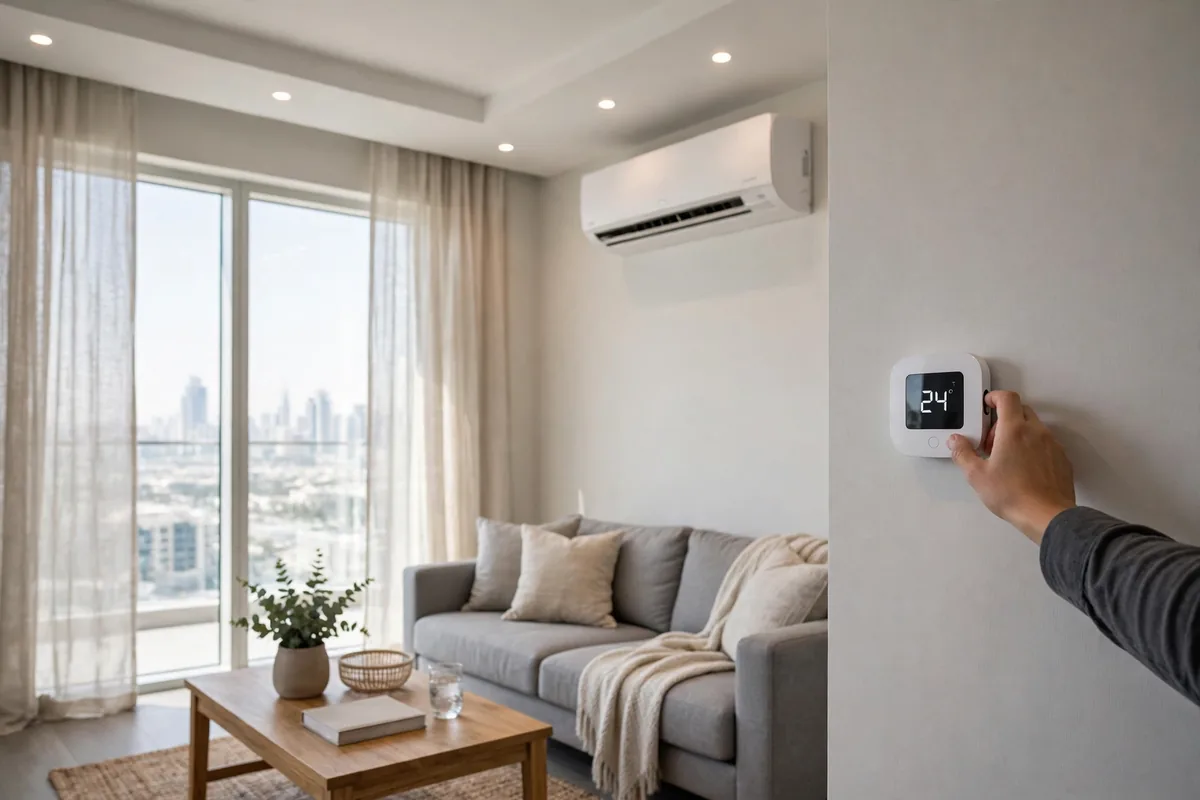
The AC takes 60% to 70% of the power in most Dubai homes. One degree makes a real difference. DEWA says set the thermostat to 24C in summer on auto mode. BoloSara24 picks 24C as the first change for most homes. Auto mode lets the unit rest when the room cools. Fan mode alone can't cool a Dubai room in August. Use it with the AC to move cool air.
Set each room on its own control when you can. Cool only the rooms you use. Shut the guest room AC off. A closed door keeps cool air in the room you use. Open doors let cool air leak into halls. Shut windows tight when the AC runs. A small gap leaks cool air all day.
Clean the AC filter each month. A dirty filter blocks air flow. The unit runs longer to cool the same room. A clean filter can cut AC power by 5% to 10%. Ask your building team for the filter spot when you move in. Most filters slide out and wash under a tap. Dry the filter fully before you put it back.
Service the AC twice a year. A full service cleans the coils and checks the gas. Low gas makes the unit run all day with weak cooling. A service costs near AED 150 to AED 250 per unit in Dubai. One service can save more than its cost in a summer month. Our list of AC cleaning services in Dubai can help you pick a team.
Good to Know: Don't set the AC to 18C to cool a room fast. The unit cools at the same speed at 24C. The 18C setting just runs longer and uses more power. Set 24C and wait 20 minutes. The room will feel cool.
Cut standby power and lighting waste
Many devices draw power when they sit off. TVs, routers, game consoles and chargers sip power all day. DEWA calls this standby load. Unplug phone chargers when the phone is full. A charger left in the wall draws power with no phone on it. Use one power strip for the TV, console and sound bar. Switch the strip off at night. One switch kills five standby loads.
LED bulbs use far less power than old bulbs. A 9 watt LED gives the same light as a 60 watt old bulb. Swap the five most used bulbs first. Hall, kitchen and living room bulbs burn longest. The swap pays for itself in months. Clean bulbs and lamp shades too. Dust dims light and tempts you to add more lamps. Drop old bulbs at a proper point. Our recycle in UAE at home guide lists where old bulbs and batteries go.
Use daylight when you can. Open curtains in the morning for light. Close them before noon to block heat. Thick curtains cut the heat that enters through glass. The AC then works less. Plants near a sunny window also shade the glass. Our guide to grow plants at home in UAE shows which indoor plants cope with Dubai sun.
Switch off lights in empty rooms. It sounds small. A family of four leaves lights on in two rooms most nights. That waste adds near AED 20 to AED 40 a month. Teach kids the habit with a simple rule. Last one out switches the light off.
Run big machines the smart way
The washing machine, dryer and dishwasher rank next after the AC. Run each one only with a full load. Half loads waste water and power. Two half loads cost more than one full load. Wash clothes in cold water when you can. Hot water heats cost power. Most Dubai laundry cleans fine in cold water.
Dry clothes on a rack when you can. A dryer uses huge power each cycle. Dubai air dries clothes fast on a balcony. Hang clothes in the morning. They dry by noon. Use the dryer only on humid days or for towels. Clean the dryer lint filter after each load. A blocked filter makes the dryer run longer.
Run the dishwasher at night. Fill it fully before you start it. Scrape plates, don't rinse them under a tap. Use the eco mode. It runs longer but heats less water.
Fridge habits matter too. Don't open the fridge door for a long look. Decide first, then open. A fridge left open leaks cold air. Keep the fridge full but not packed. Full shelves hold cold air. Check the door seal each month. A loose seal leaks cold air all day. Set the fridge to 3C and the freezer to minus 18C. Colder settings waste power with no gain.
Track your use with the DEWA tool
DEWA runs a free Consumption Assessment Tool on its site. Sign in with UAE Pass or your DEWA ID. Answer short questions on your home and your devices. The tool shows where your power goes. It gives tips for your home type. A villa with a garden gets pool and outdoor tips. A flat gets AC and lighting tips.
Use the tool once each season. Summer use differs from winter use. The tool updates its tips with your answers. Pair it with the Smart Living dashboard. The dashboard shows daily kWh. A day with a spike points to a cause. Did you run the dryer three times that day? Did a guest leave the AC on 18C?
Set a monthly kWh goal for your home. A 2 bed flat can aim for under 2,000 kWh in winter and under 3,500 kWh in summer. A villa needs a higher goal. Write the goal on the fridge. Check the meter each Sunday. Small weekly checks beat one big shock at bill time.
Note: DEWA also offers a Green Bill and paperless billing. The bill arrives by email and app. You save paper and you see the bill the day it lands. Late fees start when the bill passes its due date. Pay on time through the app to skip the fee.
Reduce electricity bill at home in UAE with kids on board
Kids can help cut the bill. Give each child one job. One child checks lights at night. One child checks the AC setting. One child unplugs chargers. A small chart on the fridge tracks the jobs. A month with a lower bill earns a family treat. The treat can be a beach evening or a home movie night.
Teach kids the slab idea in plain words. Tell them the first units cost less. Tell them each saved unit keeps the price low. Kids who grasp the idea switch off lights on their own. A family in Al Barsha cut its bill by AED 180 a month with kid patrols alone.
Compare your bill with neighbours in the same building when you can. Same flat size, same AC type. A bill twice the neighbour's bill points to a habit or a fault. A bill near the neighbour's bill means your home runs fine. Ask the building watchman about AC service days. Many buildings run group service at a lower price. Families in the capital can plan the same way with our cost of living in Abu Dhabi guide.
Living costs add up in Dubai. Power is one part of the monthly spend. Our cost of living in Dubai guide puts the power bill beside rent, food and transport so you can plan the full month.
Frequently Asked Questions
How can I reduce electricity bill at home in UAE fast?
Set the AC to 24C on auto mode and clean its filter. Switch off standby devices at the strip. Use LED bulbs. Run machines only with full loads. These steps cut the next bill.
What AC temperature saves the most power in Dubai?
DEWA says 24C in summer on auto mode. Each degree below 24C adds near 6% to AC power use. Don't set 18C to cool a room fast. It cools at the same speed and runs longer.
Why is my DEWA bill so high in summer?
The AC runs longer and harder in summer heat. Use jumps from near 1,800 kWh in winter to near 3,400 kWh in summer for a 2 bed flat. The extra units also move into higher priced slabs.
What is the DEWA slab tariff for homes?
Homes pay 23 fils per kWh for the first 2,000 kWh, 28 fils to 4,000 kWh, 32 fils to 6,000 kWh and 38 fils above that. A fuel surcharge of 6 fils per kWh applied in November 2026. VAT of 5% sits on top.
Does unplugging chargers really save power?
Yes, a small amount each day. Chargers and standby devices draw power all day. One power strip switched off at night kills five standby loads at once. The saving adds up across a month.
How do I check my DEWA use each day?
Open the DEWA Smart Living dashboard in the DEWA app or on the DEWA site. It shows daily kWh. The Consumption Assessment Tool gives tips for your home type.
Official Sources
– DEWA Slab Tariff – Official DEWA page with home electricity slab rates, fuel surcharge for November 2026 and 5% VAT note. – DEWA Water Management – Official DEWA page with water and power saving tips for homes. – DEWA Conservation Tips – Official DEWA guide with room by room power and water saving tips. – DEWA – Official Dubai Electricity and Water Authority site for bills, Smart Living and the Consumption Assessment Tool.
Disclaimer
BoloSara24 is an independent guide. It has no link with the UAE government, DEWA or any body named here. Facts were checked on official sources on 29 November 2026. Tariffs, fuel surcharge and VAT rules change. Confirm them on the official DEWA page before you plan a budget. This page gives general information only. It is not legal, financial or immigration advice. BoloSara24 updates its guides when official pages change their facts.
Last Updated: 29 November 2026.