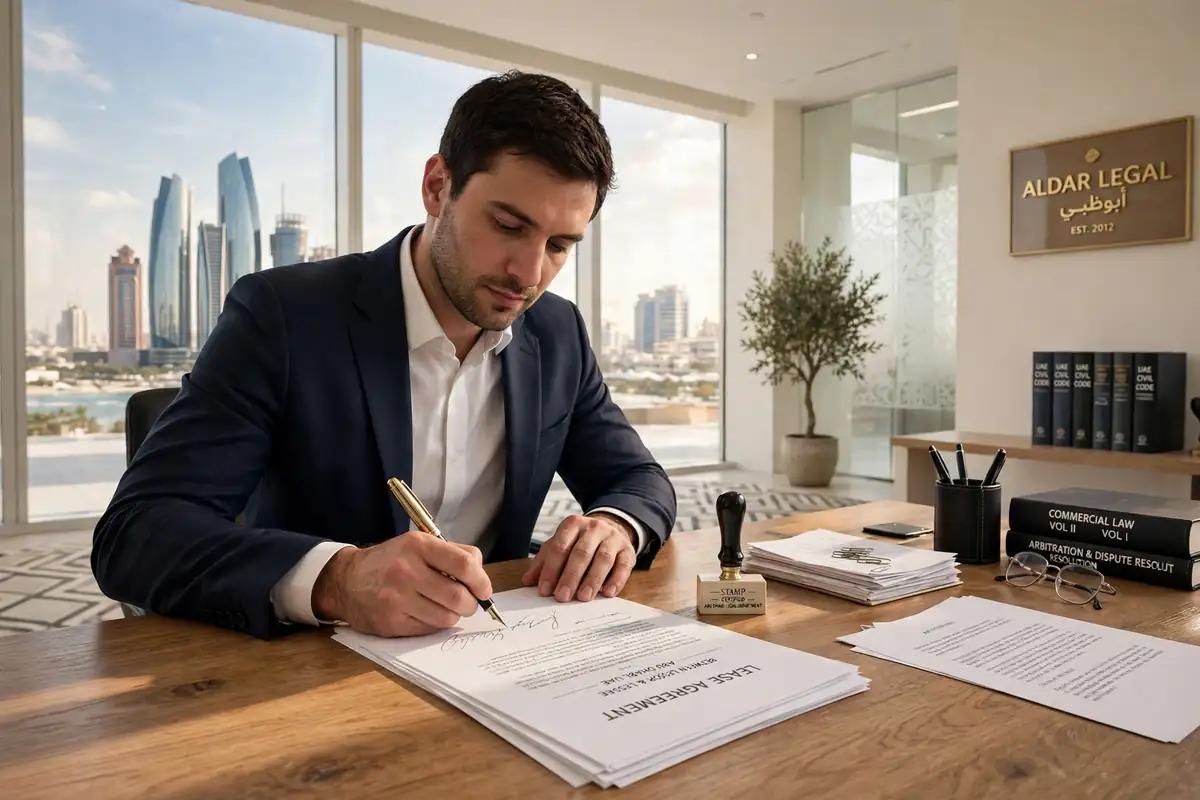
An ADJD will registration UAE lets you record your will with the Abu Dhabi courts. Your family then has an official record to follow after your death. No one needs to prove the will is real. The court already holds it on file.
The Abu Dhabi Judicial Department runs the service through the Civil Family Court. The service covers wills for non-Muslims who aren’t UAE citizens. You apply online on the ADJD site. You attend a video call to sign the will before the court.
Quick Answer: ADJD will registration UAE runs online through adjd.gov.ae. You send the will form. The court reviews it. You pay the fee. Then you book a video call to sign it before the court. Forms come in Arabic and English. The will can cover funds and property outside the UAE too. The service is for people who are not UAE citizens.
ADJD Will Registration UAE: Who Can Register
The ADJD FAQ states the service in one line. A request to register a will for non-Muslims goes through the ADJD site. The Abu Dhabi civil law covers wills for foreigners who live in the UAE. The will states how your money and property should pass after your death.
You must be a person who isn’t a UAE citizen. The service suits expats who own a home, a bank account, or a business in the UAE. It suits parents who want to name a guardian for young children.
A will made in your home country may not work fast in the UAE. The UAE court must first accept it and prove it. That takes time and money. A will registered with ADJD sits on the court record already. Your family shows the court record and moves ahead. That is the whole point of the service.
Eligibility: You must be a non-Muslim who is not a UAE citizen. You must hold a valid passport. You must be able to sign the will in a video call with the court. You can also send a representative with a valid power of attorney.
What Your Will Can Cover
A will can cover more than a house. Think through your full estate before you draft it. A missing asset can cause a fight later.
Your will can name who gets your bank accounts. It can name who gets your home and your car. It can name who gets your shares and your business stake. It can cover funds and property outside the UAE. The ADJD FAQ states this point in plain words.
Your will can name a guardian for your minor children. This point matters most to young parents. The will states who should care for the children if both parents die. Pick a person you trust. Speak to that person first.
Karen, a teacher from the UK, lives in Dubai with her husband and two children aged 5 and 8. They own a flat in Dubai Marina. Karen registered her will with ADJD in 2025. Her will gives the flat to her husband and names her sister as guardian for the children. Her husband registered a matching will the same week. Their children now have a clear plan if the worst happens.
How ADJD Will Registration UAE Works Step by Step
The ADJD FAQ lists four steps. Follow them in order. Each step has a paper to match.
First, send the request on the ADJD site for your ADJD will registration UAE. Open adjd.gov.ae and sign in with UAE Pass. Pick the service “Request to Authenticate a Civil Will”. Fill in the form. You can send the request yourself. Your representative can send it too if they hold a legal power of attorney from you. Read our guide on attest power of attorney property UAE if your representative will act on your papers.
Second, the court reviews the request. A court employee reads the file and the attached papers. The employee may ask for a fix or a missing paper. Answer fast when they ask. A slow reply can push your video call back by weeks.
Third, pay the fees. The court charges a fee for the service. The ADJD site shows the current amount when you apply. Confirm the amount on the site before you pay. Keep the payment receipt with your file.
Fourth, book the video call. The court sets a video call to probate the will. You join the call and sign the will before the court. The court then certifies the will and records it. You get a digital copy with a record number. Keep the copy safe and tell your executor where it sits.
Note: The will form comes in Arabic and English. ADJD gives you the form in both languages. A will in another language needs a legal translation into Arabic. Get the translation from a translator approved by the UAE Ministry of Justice.
Papers You Need for ADJD Will Registration
The paper list is short. Keep every copy clear and current. A blurry scan can send your request back.
You need the draft will on the ADJD bilingual form. You need a copy of your passport. You need a copy of your Emirates ID if you hold one. You need a UAE Pass account to sign in to the portal. You need the names of your heirs and your guardian spelled exactly as they appear on their passports. Check each name twice before you send the file. A name spelled two ways on two papers can cause a delay.
Tip: Draft the will with a lawyer who knows UAE wills. A lawyer spots the gaps you may miss. A bad will can cost your family far more later.
What Happens Without a Will
A will is a choice. The law sets the default when you make no choice. Federal Decree-Law No. 41 of 2022 sets the default shares for non-Muslims. The estate passes to the surviving spouse and the children first. Half passes to the surviving spouse. The other half is shared in equal parts among the children. Sons and daughters get equal shares. Where there are no children, the estate passes to the parents. Where there are no parents, it passes to the brothers and sisters.
Any heir can ask the court to apply the law of the home country instead. The court can allow this unless a registered will states otherwise. A family with no will can face two claims at once. One heir may want the UAE default shares. Another may want the home country shares. The court must settle the fight. The estate stays frozen while the fight runs. A will stops this fight. The will states the shares in plain words. The court follows the will.
ADJD Will vs DIFC Will: Which One Fits You
Two main routes exist for non-Muslim wills in the UAE. ADJD is one. The DIFC Wills Service Centre is the other. Dubai Courts also offers a notary route.
ADJD suits most expats. It’s an Abu Dhabi court service. It is open to people across the UAE. It runs online with a video call. It covers UAE assets and assets abroad. The forms come in Arabic and English. The court fee is modest.
The DIFC route suits people who want an English common-law will. The DIFC Wills Service Centre registers wills in English. It can cover worldwide assets in a full will. The fees are higher than the ADJD fee. Read our guide on DIFC will registration in UAE to compare the two routes side by side.
Fees: ADJD charges a fee for the will service. The ADJD site shows the current amount when you apply. Confirm it on the site before you pay. The DIFC fee is higher. Ask the DIFC centre for its current fee list.
How to Change or Cancel Your Will
A will isn’t set in stone. Your life changes and your will should change with it. A new child, a new home, or a divorce can all call for a new will.
You can amend a registered will through ADJD. Send a fresh request on the ADJD site. State the change you want. The court reviews it and sets a new video call. You sign the amended will before the court. The court records the new version. The old version no longer stands.
Review your will each year. A quick read takes ten minutes. Check the names, the guardian, and the shares. A will that names an ex-spouse as heir may no longer match your wish after a divorce. Read our guide on divorce in UAE for expats if your family status has changed.
Good to Know: BoloSara24 says tell your executor where the will sits. A will no one can find is no better than no will at all. Keep a copy at home and a copy with your lawyer. Give the court record number to your executor in writing.
How Your Family Uses the Will Later
Your family will need the will at a hard time. Make the path easy for them now.
The executor starts the process. The executor sends a request to the ADJD office for the executive wording stamp on the will. The court employee reviews the request and the attached papers. The applicant pays the fees set in the judicial fees table. The court then stamps the will with the executive wording. The stamp lets the executor act on the will.
The executor then deals with each asset. The bank asks for the stamped will and the death certificate. The Land Department asks for the same papers for a home. Keep the death certificate attested and ready. Our guide on attest documents UAE embassy lists the attestation steps for papers from abroad.
BoloSara24 checked the ADJD FAQ page on 29 November 2026. The page lists the steps in plain words. Apply online, pay the fees, and book a video call to probate the will. BoloSara24 lists the official pages for this topic at the end of the page. Check the ADJD FAQ and the Ministry of Justice text before you apply. Rules can change and the court site shows the live version. If a rule on this page differs from the court site, the court site wins.
Frequently Asked Questions
Who can register a will with ADJD in UAE?
The ADJD service covers wills for non-Muslims. It’s open to people who aren’t UAE citizens. You apply online on adjd.gov.ae and sign the will in a video call before the court.
How do I register a will at ADJD?
Send the request on the ADJD site with UAE Pass. The court reviews the file. You pay the fee. You book a video call to probate the will. The court then certifies the will and records it.
What papers do I need for ADJD will registration?
You need the draft will on the ADJD bilingual form. You need a copy of your passport. You need a copy of your Emirates ID if you hold one. You need a UAE Pass account. A will in another language needs a legal Arabic translation.
Can my ADJD will cover property outside UAE?
Yes. The ADJD FAQ states that you can bequeath funds and property located outside the country. List each foreign asset in the will with its full facts.
What happens if I die without a will in UAE?
Federal Decree-Law No. 41 of 2022 sets the default shares for non-Muslims. Half of the estate passes to the surviving spouse. The other half is shared in equal parts among the children. Any heir can ask the court to apply the law of the home country instead.
Can I change my ADJD will later?
Yes. Send a fresh request on the ADJD site with the change you want. The court reviews it and sets a new video call. You sign the amended will before the court. The court records the new version and the old version no longer stands.
Official Sources
- Abu Dhabi Judicial Department FAQ: ADJD FAQ page with the will registration steps, the video call, the bilingual form, and the rules on foreign assets.
- Abu Dhabi Judicial Department Civil Family Court: ADJD page on the Civil Family Court, civil marriage, civil divorce, and wills.
- Federal Decree-Law No. 41 of 2022: Full text of the Civil Personal Status Law from the Ministry of Justice, with Article 11 on the distribution of the estate.
- UAE Government Portal Personal Status for Non-Muslims: u.ae page on the civil personal status rules for non-Muslims in the UAE.
Disclaimer: BoloSara24 is an independent guide. It has no link with the UAE government, the Ministry of Justice, the Abu Dhabi Judicial Department, or any court. The facts here were checked on the official pages listed above on 29 November 2026. Rules and fees can change. Confirm the live rules on the ADJD site before you apply. This page gives general facts only. It is not legal advice. For advice on your own matter, speak to a licensed lawyer in the UAE.
Last Updated: 29 November 2026.