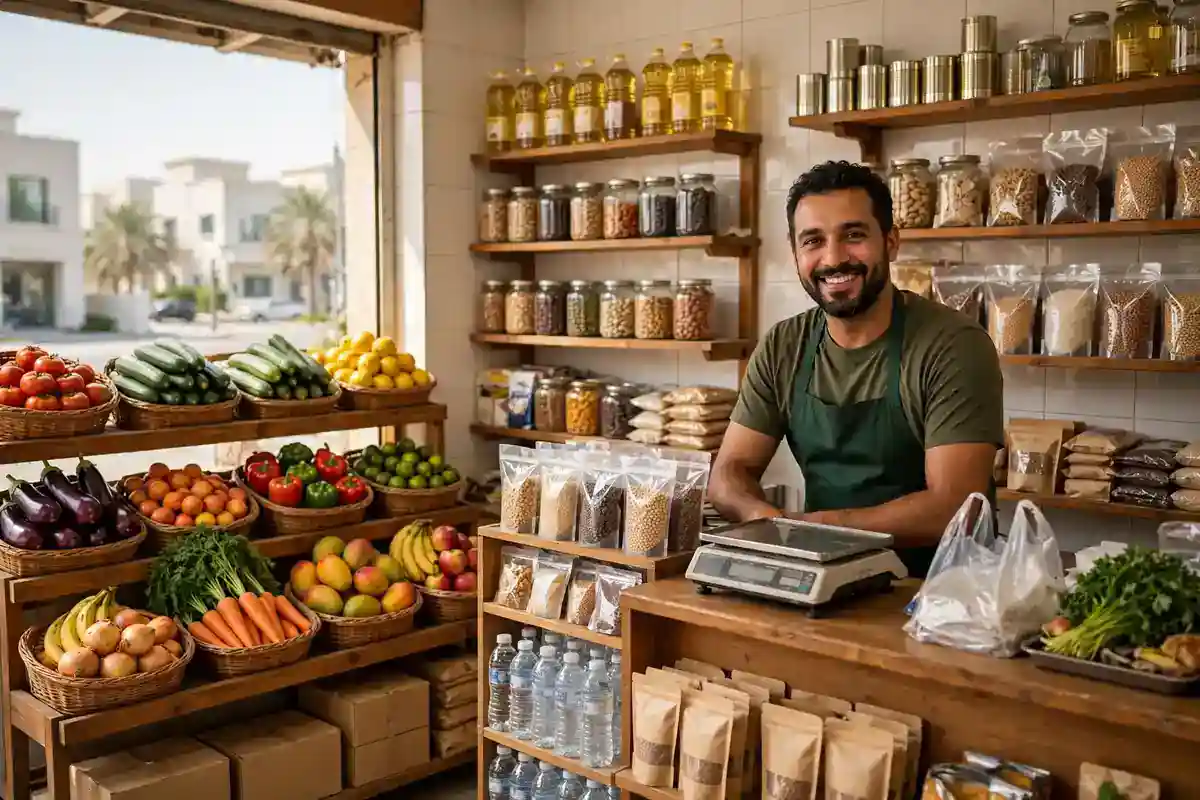
A grocery shop earns a little from each sale. BoloSara24 lists it as one of the steadiest small shops in the UAE. It earns all day, every day. People buy rice, milk, bread and tea daily. A shop near homes never runs out of customers. This guide shows you how to start a grocery shop business in UAE in plain steps.
You need a trade licence first. Then you need municipality food approval for the shop. Some goods need extra permits too. BoloSara24 checked the official u.ae mainland steps page on 29 November 2026. That page lists the nine steps used here.
Quick Answer: Pick the grocery activity and legal form. Reserve a trade name and get initial approval. Sign a shop lease and get the food layout approved. Then pay and take your licence. Stock fresh goods from approved suppliers.
What a Grocery Shop Sells
A grocery shop sells daily food and home goods. Rice, flour and sugar fill most shelves. Milk and bread fill the next shelf. Eggs, tea and coffee fill the rest. Soap, tissue and cleaning goods fill the rest. Fresh fruit and vegetables need extra care. Meat and frozen goods need extra permits.
Pick your range before you apply for a grocery shop business in UAE. A small grocery sells dry goods and dairy. A minimart adds fresh produce. A supermarket adds meat, fish and a bakery. The bigger the range, the more approvals you need. Start small and grow later.
A shop in a residential block serves the same families each week. They buy small amounts often. They pay cash or card at the counter. They ask for credit till month end. A shop near offices serves workers at lunch. Match your range to your street.
Kumar runs a small grocery in a Sharjah block. His shop opens at 7 in the morning. Workers buy bread and milk before their shift. Mothers buy rice and oil in the afternoon. His shelves turn over fast. His range fits his street.
Pick Your Activity and Legal Form
The activity on your licence must match your goods. A grocery activity covers retail food and daily goods. A supermarket activity covers a larger store with fresh and frozen goods. A general trading activity covers mixed goods beyond food. Pick the one that fits your true range.
The legal form shapes your firm. Read how to start a business in UAE for the full mainland and free zone choice. A sole establishment suits one owner. An LLC suits partners. The u.ae page lists LLC, sole establishment and other forms. Your partners and your risk appetite decide it.
Do and Dont: Do list every product group you plan to sell. Don’t add meat or medicine later with no approval. A new product group can need a fresh permit.
Your trade name must follow UAE rules. It must not break public morals. It must not copy a known brand. It must carry the legal form at the end, like LLC. Give three name choices in order. The department may reject your first pick.
How to Start a Grocery Shop Business in UAE Step by Step
The u.ae page lists nine steps for a mainland start. They run in this order. Follow them in order and you save weeks.
Step 1: Pick the business activity. Write down what you will sell. Dry goods and dairy. Fresh produce and frozen goods. That list drives the activity code.
Step 2: Pick the legal form. Sole establishment or LLC are the common picks. Your partners decide it with you.
Step 3: Reserve the trade name. File three choices with the economic department. Pay the name fee. Keep the approval paper safe.
Step 4: Get initial approval. The department checks your activity and your name. This approval lets you move ahead. It isn’t the final licence.
Step 5: Sign a shop lease. Pick a shop that fits food rules. The lease must be registered. In Dubai that means Ejari. The lease is a must for the final licence.
Step 6: Get municipality approval for the layout. Send your floor plan to the Food Safety Department. They check storage zones, cold rooms, wash points and waste handling. Don’t start fit-out before this approval.
Step 7: Fit out the shop. Build to the approved plan. Fit shelves, fridges, freezers and a clean counter. Keep raw food zones apart from ready food. Fit a proper waste area at the back.
Step 8: Pass the site inspection. Municipality inspectors visit the shop. They check hygiene, cold storage, product dates and staff health cards. Fix any point they raise fast.
Step 9: Pay the fees and take the licence. The department issues the trade licence once all approvals sit in the file. You must renew your trade licence each year after that. Your shop can then open its doors.
Tip: Never sign a long lease before the layout approval. A shop that fails food rules wastes your rent. Check the plan with the municipality first.
Grocery Shop Business in UAE Licence Costs
Costs vary by emirate, shop size and visa count. No single fee fits all grocery shops. The list here shows the cost items you must budget for. Check the live fee on the DET portal before you pay. Fees change and each case differs.
Cost: Trade name reservation fee. Initial approval fee. Trade licence fee. Ejari lease registration fee. Municipality food layout approval fee. Civil Defence clearance fee. Food control permit fee for fresh goods. Staff health cards. Fit-out, shelves and fridges. Rent and deposit. First stock order. Staff visas.
The licence fee is the biggest single government charge. It depends on your activity and your legal form. A small grocery pays less than a big supermarket. The portal shows the exact fee once your activity is set.
Rent often tops the first year budget. A shop on a busy road costs more than a shop in a side lane. A shop near homes earns steady daily trade. Read our cheapest groceries in Dubai guide to see how small shops price daily goods. Weigh rent against the crowd it brings. A cheap shop with no crowd earns nothing.
Stock is the next big cost. Your first order fills every shelf. Rice and oil cost the most in one order. Fresh goods need small frequent orders. Don’t overstock goods that spoil fast.
Pick a Spot That Earns
Location decides half your sales in a grocery shop business in UAE. A shop inside a residential block sells daily goods. Match the spot to the crowd you want.
Check the crowd before you sign. Stand at the spot at 7 in the morning and again at lunch. Three visits tell you more than any agent pitch.
Check parking and access too. A shop with no parking loses drivers. A shop up a dark lane loses walk-ins. A shop near a metro stop gains both. Delivery bikes need a clear spot at the door.
Check the rent terms in plain words. Ask about the deposit. Ask about the yearly rise. Ask who pays for repairs. Get every promise in the lease. A verbal promise means nothing later.
Note: A shop that held a grocery before can save you time. Its shelves and cold rooms may already fit food rules. Still check the layout with the municipality. Old approvals do not pass to you.
Suppliers and Stock
Suppliers decide your margin. A wholesale market gives the best price for rice, oil and sugar. Compare three suppliers before you pick one.
Keep a stock list on paper or on a phone. Order fast goods in bulk. Order slow goods in small amounts. That’s cash locked on a shelf.
Check expiry dates each week. Move old stock to the front. Throw out any item past its date. An expired item on a shelf can bring a fine. It can also lose a family for good.
Keep every supplier bill. The municipality can trace each item back to its source. A bill you cannot show is a risk. File bills by month in one folder.
Fresh goods need a cold chain in a grocery shop business in UAE. Fridges must hold the right temperature each day. Freezers must stay shut and clean. Log the temperature and keep the log. A warm fridge spoils milk in hours.
Food Safety Rules for a Grocery Shop
Dubai Municipality runs FoodWatch. FoodWatch is the digital food safety platform. Every food business must register on it. The platform tracks suppliers, staff training and permits. Your Person in Charge uses it to file permits.
Your shop needs a trained Person in Charge. That person holds a food safety certificate. They watch hygiene each shift. They log temperatures and cleaning. One trained person per shift is the safe rule.
Staff who touch food need health cards. The cards come after a medical check. Keep every card valid. An expired card can fail an inspection.
Some goods need extra care. Meat and fish need a food control permit. Medicines need a separate licence and most groceries cannot sell them. Cosmetics need their own approval. Check each product group before you stock it.
Money, Prices and Opening Day
Price with care. BoloSara24 readers who run groceries say a fair price brings the same families back each week. Your margin on rice and oil is thin. Your margin on snacks and drinks is better. A fair price brings repeat families. A high price sends them to the next shop.
Keep a cash book from day one. Our VAT registration guide helps you check if your shop must register for VAT. Write each sale and each cost. A shop that tracks cash sees leaks fast. A shop that guesses cash loses money slow and quiet.
Hire one helper at first for your grocery shop business in UAE. Train them well. You need a counter hand and a stock hand. Train them on hygiene from day one. A dirty counter on day one loses a customer for good.
Plan a soft opening. Open quietly for a week. Fix the slow points. Then tell the block about your shop. A soft start beats a loud start with empty shelves.
Do you know your daily break-even number? Work it out before you open. Add rent, staff pay, stock cost and licence cost for one month. Divide by 30 days. That number is your daily target. Every day you miss it, you know at once.
Common Mistakes New Owners Make
Common Mistakes: You sign the lease before layout approval. You pick a wrong activity code. You stock meat with no food control permit. You overstock goods that spoil fast. You skip FoodWatch registration. You hire staff with no health cards.
The stock mistake costs the most. Spoiled goods eat your cash. Order fresh goods in small amounts. Order dry goods in bulk. Watch the expiry dates each week.
The activity mistake costs the next most. A grocery activity cannot sell a supermarket range. The municipality will stop the extra items. Pick the activity that fits your true range.
Frequently Asked Questions
How much does it cost to start a grocery shop in UAE?
It varies by emirate, shop size and visa count. Budget for the licence and Ejari. Add municipality approval and fit-out. Add fridges, rent, first stock and staff visas. Check the live fee on the DET portal for your exact case.
Do I need a municipality permit as well as a trade licence?
Yes. You need both. The trade licence comes from the economic department. The food approval comes from the municipality. One cannot replace the other.
What is FoodWatch?
FoodWatch is Dubai Municipality’s digital food safety platform. Food businesses register on it. It tracks suppliers, staff training and permits. Your Person in Charge uses it each day.
Can a foreigner own a grocery shop in UAE?
Yes, on the mainland in most cases. The exact rules depend on the emirate and the activity. Check the DET portal for your case before you invest.
How long does it take to open a grocery shop?
A clean file takes a few weeks. Layout approval, fit-out and inspection take the most time. A wrong activity or a bad layout adds weeks.
Can I sell medicines in my grocery shop?
No, not with a grocery licence. Medicines need a separate pharmacy licence. Most grocery shops cannot sell them. Check the rules before you stock any drug.
Official Sources
- Steps to start a business on the mainland on u.ae: the nine official mainland steps and licence types.
- Department of Economy and Tourism Dubai: trade licences and business activities in Dubai.
- Dubai Municipality food traders and establishments: food rules and FoodWatch guidance.
- Dubai Municipality: food safety permits and inspections.
- Dubai Land Department: Ejari tenancy registration.
Disclaimer: BoloSara24 is an independent guide. It is not a government body. Rules and fees can change. Check the live DET and municipality pages before you spend.
Last Updated: 29 November 2026.